
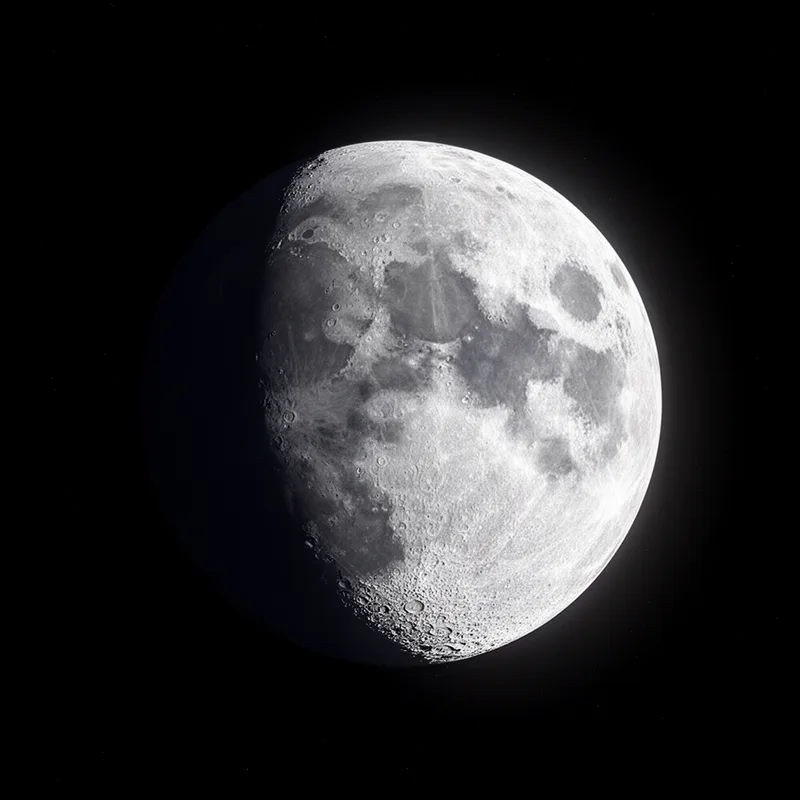
lunar
 101
3.9
101
3.9

- adjective
- /ˈluːnər/
- There would only be resources for six more lunar flights.
- a lunar eclipse
- a lunar month
- a lunar cycle
Loading YouTube…
Watch on YouTubeInstead, many scientists think humans may have a circle lunar rhythm.
- Instead, many scientists think humans may have a circle lunar rhythm.
- But Easter, that's based on a lunar cycle.
- We are looking for microbes landing next to temples on the surf, on the lunar surface.
- I I've been planning the next rotation and the theme is new moons and it's playing off the fact that the lunar New Year is fast approaching.
- But there is zero data to support the idea that the menstrual cycle and the lunar cycle are LinkedIn any kind of causal way.
- It's like, it's like the, the there's a lunar part of the equation.
Examples
-
No one has ever attempted to give birth in lunar gravity before.
Fiction book (1995) -
"To me, it looks like the control board for a lunar shuttle," he replied.
Fiction book (1995) -
One day short of a lunar month.
-
We have been here for two lunar cycles now, and the work goes slowly.
Fiction book (1994) -
Apollo 8 now in lunar orbit.
-
Neil Armstrong has been on the lunar surface now almost 45 minutes.
-
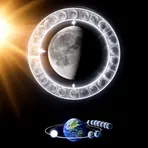
This is the lunar orbit, and it's an ellipse.
-
The Apollo astronauts, to answer your question, they sure did bring back lunar dirt.
-
Tessa stepped back onto the lunar surface, walked slowly and deliberately over to stand beside Rick.
Fiction book (1996) -
The astronauts conducted experiments on the lunar surface during their historic mission.
Synonyms


Compounds

- Specialized
8
4.9
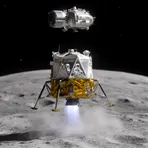
A small spacecraft that carries astronauts from orbit down to the moon's surface and back


- Specialized
 1
8.6
1
8.6
A small spacecraft that takes astronauts from the main spacecraft to the moon's surface and back



How Far
- Specialized
50
7.2
 18
6.8
18
6.8
- Specialized
101
3.9
- Specialized
1
9.9
17
5.2
Surface Forms
Morphology
lunar = moon (semi-transparent) = luna + ar
The adjective clearly means 'relating to the moon', but the form uses the Latin root 'luna-' rather than the common English word 'moon', so learners may recognise the meaning but not deduce the form from 'moon'.
Etymology
Lunar comes from the old Latin word luna, which means 'moon' and is also a common name. So lunar means 'relating to' or 'like the moon', as in a lunar eclipse or the lunar surface.