
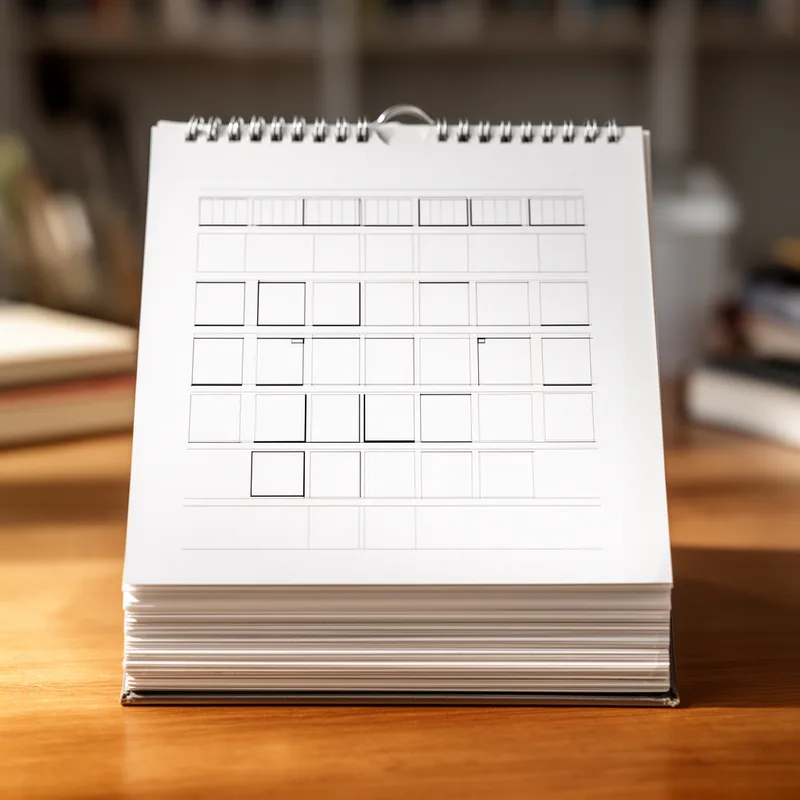
calendar
 73
1.0
73
1.0

- noun
- /ˈkælɪndər/
- You know, I've been meaning to point out that Leap Day was invented to reconcile the calendar every four years.
- calendar year
- calendar days
- calendar week
Loading YouTube…
Watch on YouTubeIt's still the basis of the calendar that we use today.
- It's still the basis of the calendar that we use today.
- They're starting to build cities, they're starting to create their calendar, they're starting to create these wonderful works of art.
- So we hit the mark with real Maya people as well at Astronic asks, why did the Mayans make their calendar look like an Oreo right off the bat?
- Because May, you know, it's really, that's when the calendar kind of starts asking you a question.
- They thought the calendar works, but we can't say how we got it.
Examples
-
Every year, I buy a calendar to mark important dates and celebrations.
-
It's still the basis of the calendar that we use today.
-
So for me, I have my To Do List and my calendar all in my calendar app.
-
And yet it seems like the entire world follows the Christian calendar, right?
-
To avoid missing the transmission season, we conducted the study in more than 1 calendar year.
Academic text (2013) -
We're ready to do the Advent calendar.
-
Vendors operate on a calendar-year basis and offer sales deals with a deadline of the end of December.
Academic text (2015) -
We all lived by this calendar now: twelve days, twenty-seven days, fifty-nine days.
Fiction book (1999) -
The community center announced the schedule for its events in the new calendar for 2024.
-
The school used a wall calendar to highlight holidays and exam dates.
Synonyms
 1
4.1
1
4.1
A calendar that makes months from the moon's phases
 1
3.9
1
3.9
A system used for counting days, months, and years in most countries today
 1
6.7
1
6.7
A 12-month calendar with 365 days and a leap day every four years used before the Gregorian calendar
 1
6.7
1
6.7
A calendar used by Jewish people with months based on the moon and extra months to keep seasons the same

 1
4.2
1
4.2
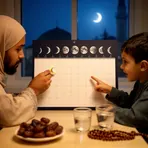
A calendar based on the moon that Muslims use to mark religious dates like Ramadan
 1
6.4
1
6.4
A lunar calendar used by Muslims that starts in the year 622 and whose months move through the solar year
 1
3.6
1
3.6
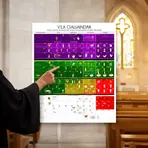
A calendar showing Christian holy days, festivals, and fasting times throughout the year
 1
8.1
1
8.1
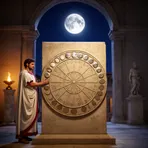
A calendar based on the moon used in ancient Rome before the Julian calendar
A calendar that uses the sun to keep the year matching the seasons

The calendar most countries use today that fixed the Julian calendar's drift

A 12-month calendar made by Julius Caesar in 46 BC with a leap day every four years

A calendar used by Jewish people that uses lunar months and adds leap months to match the seasons

A calendar using the moon and the sun to set Hindu religious dates, adding an extra month sometimes
Compounds


 1
6.7
1
6.7
A 12-month calendar with 365 days and a leap day every four years used before the Gregorian calendar
1
6.7
A calendar used by Jewish people with months based on the moon and extra months to keep seasons the same
 1
3.6
1
3.6
A calendar showing Christian holy days, festivals, and fasting times throughout the year
1
6.4
A lunar calendar used by Muslims that starts in the year 622 and whose months move through the solar year
1
4.2
A calendar based on the moon that Muslims use to mark religious dates like Ramadan

- Specialized
1
6.7
A device or chart that shows the day of the week for any date over many years

- Specialized
A method of avoiding pregnancy by counting days of the period to find fertile days

- Specialized
A way to avoid pregnancy by tracking a woman's periods and avoiding sex on days when she can get pregnant


- Formal
A plan of the Christian year showing dates of fasts and holy days like Easter


A calendar that uses months based on the moon and adjusts years to match the sun

- Offensive
Muslims use a moon-based calendar to date religious events and festivals


- Archaic
A lunar calendar used by Muslims that starts in 622 AD and whose months move through the year
A calendar used by Jewish people that uses lunar months and adds leap months to match the seasons
- Indian
A calendar using the moon and the sun to set Hindu religious dates, adding an extra month sometimes

- Archaic
A calendar created during the French Revolution that starts on 22 September 1792 and ends in 1805

- Archaic
A month in the French Revolutionary calendar used in France from 1793 to 1805
A 12-month calendar made by Julius Caesar in 46 BC with a leap day every four years


Surface Forms
Etymology
Calendar comes from the Latin calendae ('first day of the month') and the idea of calling out dates to organize time, because communities used those days to plan seasons and festivals. That is why a calendar is a system for dividing and ordering the year.