
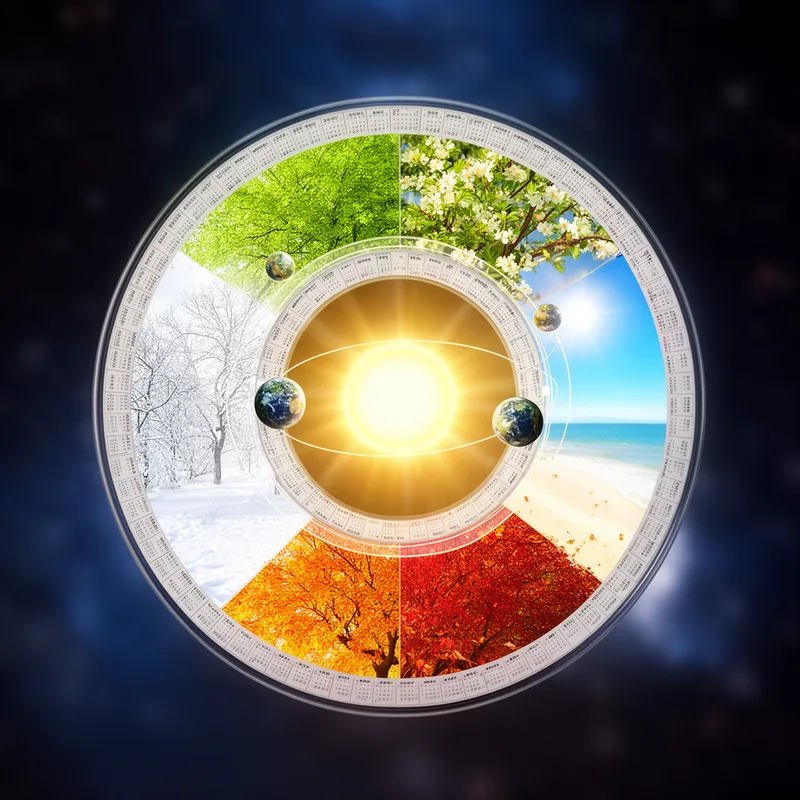
solar calendar
- noun
- /ˈsoʊlər ˈkælɪndər/
- Farmers in this region rely on the solar calendar to determine the best time for planting crops.
Loading YouTube…
Watch on YouTubeThey call themselves the Haya Hashtadi in Persia because Iran follows the solar calendar of its own as an ancient solar calendar.
- They call themselves the Haya Hashtadi in Persia because Iran follows the solar calendar of its own as an ancient solar calendar.
Examples
-
They call themselves the Haya Hashtadi in Persia because Iran follows the solar calendar of its own as an ancient solar calendar.
-
Hong Kong adheres to both the lunar and solar calendars, so we get to celebrate the biannual renewal of both.
Blog text (9) -
The Jewish chronology is based on lunar months and is therefore very hard to correlate with a standard solar calendar.
Academic text (1991) -
The Jewish calendar is based on the orbit of the Moon around Earth, but it keeps up with the solar calendar by adding an extra month, Adar 2, every four years.
Academic text (2002) -
However, because of the 11/12 day discrepancy between lunar and solar calendars, lunar calendars tend to get out of sync with the seasons.
Blog text (3) -
The New Year's ceremony, which is based on the pre-Islamic solar calendar rather than the Islamic lunar calendar, is performed to cleanse the community of harmful and polluting influences and to ensure its protection throughout the coming year.
Academic text (1995) -
The Rato Nale is charged with predicting the event, which marks the beginning of a series of local festivals whose observance must also correspond to a lunar-solar calendar.
Academic text (2003) -
Many cultures use a solar calendar to mark the changing seasons throughout the year.
-
The ancient Egyptians developed a solar calendar to track agricultural cycles and religious festivals.
How Lunar


Surface Forms
Morphology
The meaning is directly compositional: 'solar' (relating to the sun) modifies 'calendar' (a system for organizing dates), so a B1 learner who knows both words can infer it is a calendar based on the sun/solar year. This adjective+noun pattern is transparent and common across languages, making the concept predictable without prior exposure.
Etymology
Solar calendar comes from people watching the sun to make a calendar. They used the sun to know when the 'year' and 'seasons' came back, so a solar calendar keeps dates in step with the sun and the seasons.