

long long ago
 1
3.5
1
3.5

- idiom
- Literature
 :
hace mucho tiempo
:
hace mucho tiempo
- I saw Cunningham in the East-West game played at Stanford long, long ago.
Because Dostoevsky actually made this point, you know, long, long ago, where he basically said that what people want is not truth.
- Because Dostoevsky actually made this point, you know, long, long ago, where he basically said that what people want is not truth.
- But I learned long, long ago to fill my souls and heals with my native earth.
Examples
-
And that ring was lost long, long ago.
-
I thought I'd tossed it away long, long ago.
-
I had hoped his mother had left the land long, long ago.
-
I thought I'd tossed it away long, long ago.
-
Because Dostoevsky actually made this point, you know, long, long ago, where he basically said that what people want is not truth.
-
But I learned long, long ago to fill my souls and heals with my native earth.
-
Our story begins in a time long, long ago... deep in an enchanted forest on the distant moon of Endor.
-
So it used to be long, long ago, you know, in the shaman era, you wouldn't go to a shaman to say, keep me healthy.
-
So you can suspend disbelief in a Galaxy far, far away, long, long ago, but when it comes to a black stormtrooper, that's too much.
-
Our story begins in a time long long ago, deep in an enchanted forest on the distant moon of Endor.
Synonyms
 521
1.0
521
1.0
A long time in the past
 87
4.6
87
4.6
Saying that something happened many years ago and is not true now
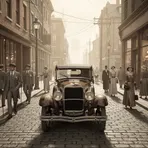 22
7.3
22
7.3
A long time ago
 8
4.8
8
4.8
From a time very long ago
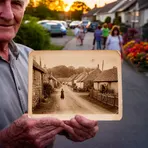

 1
9.9
1
9.9
Long ago in the old days
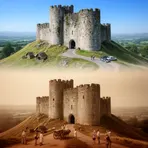
A long time ago
Antonyms

How Distant

Surface Forms
Morphology
The meaning 'a very distant time in the past' is directly derivable from combining 'long' (for an extended time) with 'ago' (since), with the doubled 'long' functioning simply as an intensifier. This compositional pattern (repetition for emphasis + 'ago' indicating past time) is transparent and cross-linguistically familiar, so a B1 learner who knows the words will understand it.
Etymology
The phrase long long ago comes from storytellers who say long twice to show a time very far away, like the start of a fairy tale. So it is used 'to introduce a story' and to mean 'a very distant time'.