

lizardlike
- adjective
- /ˈlɪzərdˌlaɪk/
Examples
-
"He smiled in his lizardlike way, remembering."
Fiction book (1991) -
Lizardlike creatures, the soldiers' mounts were ugly and misshapen.
Fiction book (1991) -
The creature had a long, lizardlike tail that swayed as it moved through the grass.
-
His lizardlike features made him blend in perfectly with the rocky landscape.
-
She watched the lizardlike movements of the gecko as it darted across the wall.
Synonyms

 19
5.5
19
5.5

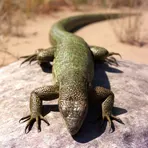
Having features like those of snakes or lizards

 1
9.9
1
9.9
Having the shape and scaly skin of a lizard
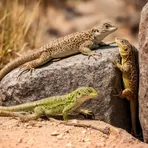
Relating to lizards and the way they act

Not showing emotion and acting as if they do not care
How Lizardlike

Surface Forms
Morphology
Etymology
Lizardlike is just lizard + the ending -like, so it literally means 'like a lizard'. Think of a lizard's quick, silent moves and its calm, almost cold look — that's why we call someone or something 'lizardlike' when it moves quietly or seems unemotional.