
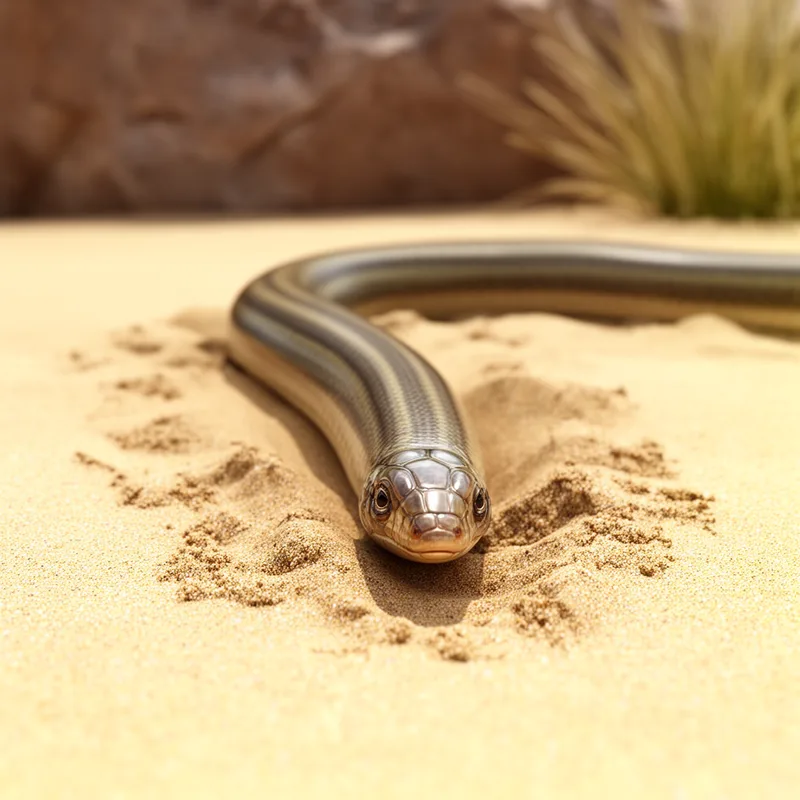
legless lizard
- noun
- /ˈlɛɡləs ˈlɪzərd/
- Specialized
- Researchers are studying the habitat preferences of the legless lizard to aid in its conservation.
- the California legless lizard
Examples
-
The legless lizard, commonly found in California, resembles a snake but is actually a lizard without legs.
-
The legless lizard slithered across the ground.
-
At first glance, a legless lizard can be mistaken for a snake, but it is not closely related.
-
Biologists study the legless lizard to understand evolutionary adaptation and limb loss.
-
The California legless lizard spends most of its life burrowing through sand and loose soil.
-
I saw a legless lizard in the garden.
-
Unlike most lizards, the legless lizard has adapted to a burrowing lifestyle, making it harder to spot in the wild.
Synonyms


 1
9.2
1
9.2
A legless lizard that looks like a snake, has eyelids and ear openings, and can grow its tail again

A lizard without legs that looks like a snake but has eyelids and ear openings
A legless lizard with a long tail that breaks off and regrows to escape predators
A legless lizard like a snake that sheds and regrows its tail
A group of legless lizards with long bodies from western North America that live underground
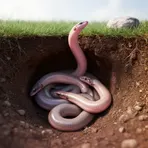
A group of legless burrowing lizards that look like worms
Surface Forms
Morphology
The meaning of 'legless lizard' is directly and compositionally built from 'legless' (having no legs) + 'lizard' (a small reptile), so a B1 learner who knows both words can infer it denotes a lizard without legs. There is no idiomatic or metaphorical shift in this phrase, making its interpretation straightforward and cross-linguistically transparent.
Etymology
Legless lizard comes from the clear picture of a lizard that is legless: it 'has no legs' and often 'looks like a small snake', so people named it by what you see. That's why today legless lizard means a lizard that lost its legs over time.