

to investigate
 ∞
2.8
∞
2.8

- verb
- /ɪnˈvɛstɪɡeɪt/
- Local authorities are working hard to investigate the recent reports of vandalism in the neighborhood.
- studies investigate
- investigate the effects
- investigate further
Loading YouTube…
Watch on YouTubeAnd did you guys investigate who the priest is at the church?
- And did you guys investigate who the priest is at the church?
- Today we officially investigate whether we have a ghost.
- That's the question that's being investigated by the scientific project.
- I just sort of like to investigate the characters through the story.
- So then they come in, they investigate what happened.
- No, no, the police investigate to see if there's anything in it.
- They want to, they investigate what's going on.
- Other people have asked why the SEC are not investigating naked short selling.
- And so investigate your triggers, investigate what that is.
- This is after the police had investigated the problem.
- And then I'll investigate and understand the player.
- Well, makes sense also to learn and investigate and live in this world.
Examples
-
I am investigating the disappearance of a Mr Milo Tindle.
-
So then they come in, they investigate what happened.
-
But we're going to investigate what that actually means.
-
Yeah, I mean, so it's my job to investigate weird things in finance.
-
The truth is I hired you to investigate my wife.
-
The purpose of this study was to investigate the impact of various curriculum models on physical activity.
Academic text (2011) -
I'm investigating the details now.
-
In our first example, we will investigate how this is produced through one of these checklists.
Academic text (2011) -
In light of this trend, this study investigates the fast-changing nature of the community college student population.
Academic text (2011) -
The intrepid explorers go down to investigate the alien life form.
Synonyms
 ∞
1.0
∞
1.0
To discover something while looking or by accident
 ∞
1.0
∞
1.0
Study something carefully to understand it or decide
 ∞
1.0
∞
1.0
Examine something to make sure it is correct or true
 ∞
2.1
∞
2.1
To learn something you did not know, often by searching or asking
 ∞
1.0
∞
1.0
To find out about something for the first time, often by chance
 ∞
2.5
∞
2.5
To look at or test something to learn more about it
 ∞
1.0
∞
1.0
To look at something carefully to understand it
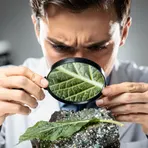 868
2.5
868
2.5
To look at something carefully to find facts or problems
 781
2.3
781
2.3
To find out a fact by checking or measuring
 675
3.2
675
3.2
To study something carefully to understand it better
 573
2.8
573
2.8
Examine something carefully to find out more
 471
2.3
471
2.3
To study something carefully to learn more about it
 300
3.1
300
3.1
To study a subject carefully to find new facts
 180
2.8
180
2.8
To read or check something carefully for mistakes
 137
3.9
137
3.9
Find the real reason for a problem by checking carefully
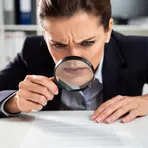 70
6.2
70
6.2
To look at something very carefully to check for mistakes
 61
4.7
61
4.7
To look deeply into a subject to find information
 59
5.7
59
5.7
To find out for sure by checking the facts
 48
3.7
48
3.7
To look carefully at something to learn about it
 35
5.1
35
5.1
To ask careful questions to find hidden information
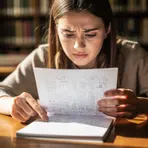 32
7.0
32
7.0
To read something slowly and carefully to understand it
 23
4.4
23
4.4
To find hidden facts or things by careful searching
 16
3.7
16
3.7
To ask questions as part of an official investigation
 14
8.4
14
8.4
To find out what is happening by looking for facts and clues
 13
6.7
13
6.7
To search carefully to find hidden facts or documents
 8
8.2
8
8.2
To find out what is really happening
 1
4.4
1
4.4
To look into something more carefully to find hidden facts

To examine by probing with a tool or by asking questions
Antonyms

How Thoroughly

Surface Forms
Etymology
The word investigate comes from the parts in- meaning 'into' and vestig meaning 'track' or 'trace', like the word vestige which means 'a small trace'. So to investigate something is like 'tracking into' it to find facts, which is why it means to examine something carefully to discover information.