

to inundate
 40
6.8
40
6.8

- verb
- /ˈɪnʌnˌdeɪt/
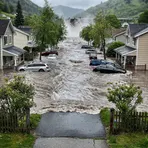
- During the heavy rainstorm, the streets were completely inundated with water, causing traffic delays.
- inundated with water
- inundate an area
- inundated by flooding
Loading YouTube…
Watch on YouTubeYou know, we're constantly inundated with accounts of tragedy, sorrow and cruelty.
- You know, we're constantly inundated with accounts of tragedy, sorrow and cruelty.
- We get inundated with recommendations for books.
- I'm sure you're being inundated with calls and texts, so I'm not going to call you today.
- You must have been inundated with emails or people calling you like what was the response?
- And it helped define my goal, which is to find something that I wanted to do rather than being inundated with all these other forms.
- So what they did is they'd make these big mounds and then they'd make huge causeways between mounds so they could walk through their cities while they were seasonally inundated.
Examples
-
Most healthcare managers are inundated with impersonal data in the form of printouts and reports.
Academic text (1993) -
The floodwaters advanced at five miles an hour across a broad front, inundating some 21,000 square miles.
Academic text (1992) -
We should inundate the board and the district with letters.
-
Go there, inundate us with purchases.
-
We will be even more inundated than we are now.
-
Okay, I am inundated with offers of management at the moment.
-
We're being inundated at the moment.
-
We get inundated with recommendations for books.
-
And I'm going to tell you why our customer service team has been inundated with emails since we opened up this free training.
-
Like most of us in today's world, faculty are inundated with mail and e-mail.
Academic text (2015)
Synonyms
 176
1.0
176
1.0
To cover a place with water when it overflows
 68
4.0
68
4.0
To flood an area with water or to overwhelm with a large amount of something
 55
5.2
55
5.2
Make something so full of liquid or color that it can take no more
 51
3.3
51
3.3
Cover a sound so it cannot be heard
 42
3.9
42
3.9
To put something completely under water or another liquid
 34
3.0
34
3.0
Make someone or something completely wet with a lot of liquid
 3
7.4
3
7.4
To fill something completely with a liquid or chemical
 1
6.0
1
6.0
To cover an area with water
 1
6.5
1
6.5
Fill a market or area with too much of something so people lose interest

To cover something completely with water or soil

To flow over land or a barrier, covering it with water

To fill an area with water or inject water underground to push out oil

To fill something with water so it cannot take any more
Antonyms

How Overwhelmed

Surface Forms
Morphology
inundate = in + unda + ate
Although analyzable as in- + unda + -ate historically, the internal elements are not productive modern English morphemes, so learners cannot reliably infer 'flood/overwhelm' from the parts.
Etymology
The word inundate comes from Latin parts in- meaning 'into' and unda meaning 'wave'. So imagine a wave coming into a place and covering it, which is why to inundate is to 'flood' or to 'overwhelm' someone or something with too much.