

to drown
 51
3.3
51
3.3

- verb
- /draʊn/
- The loud music drowned out the sound of our conversation.
- drown out the voice
- drown out the noise
- drown out the words
Loading YouTube…
Watch on YouTubeThe whirring noise of the hand drills drowns the ringing in the ears.
- The whirring noise of the hand drills drowns the ringing in the ears.
Examples
-
His smile set in motion a wave of applause, which drowned out all other sounds.
Fiction book (1990) -
A cacophony of drilling and hammering drowned out the rushing of the river.
Academic text (2003) -
I'll put you back on the team, But you must promise not to drown out the other children.
-
It's drowning out my words!
-
The music and the applause drown out his words, and we do not hear them.
Fiction book (1992) -
The more they babble, the more they drown out the memory of her voice.
-
Suddenly, from down the block, there's a noise loud enough to drown out all the blaring horns.
Fiction book (1992) -
A note of affection creeps into Gadjiev's voice, which is almost drowned out by cicadas.
Academic text (2008) -
Muzak plays "Moonlight Sonata," drowning out the manifold reasons we cannot continue to live together.
Fiction book (1994) -
The voice of dissent was drowned out by the louder, jargon-clotted voices of tenure-seeking scholars.
Academic text (2001)
Synonyms
 143
4.8
143
4.8
To completely cover or hide something so it disappears
 40
6.8
40
6.8
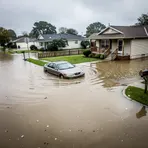
To cover a place with water or give someone too much to deal with
 40
5.1
40
5.1
To cover something completely and suddenly, often by fire or water
 37
3.5
37
3.5
To make a sound so loud that you cannot hear another sound
 15
4.6
15
4.6
To cover completely so it cannot be seen, often by water or strong feeling
 4
4.2
4
4.2
Cover something completely so it cannot be seen or noticed

To cover something completely with water or soil
Antonyms


Idioms

Phrasal Verbs
How Loud

Surface Forms
Etymology
Drown comes from an old word about being covered by liquid, a meaning it shares with drink, and this gives a clear image of hiding something. So when a sound or smell is drowned out, it is covered or made hard to notice by something stronger.