

to impose a fine
 1
3.8
1
3.8

- phrasal verb
- /ɪmˈpoʊz ə faɪn/
- Formal
 :
imponer una multa
:
imponer una multa
- When arraigned before Justice Wallace, the offending garments were laid on his honor's desk, and he promptly imposed a fine of $25.
Examples
-
The school board will impose a fine on students who miss more than five days without an excuse.
-
The ACC could potentially impose a fine or suspend Rashad after viewing the film.
Blog text (5) -
We have therefore decided to impose a fine of 500 pounds.
-
You may also wish to impose a fine for violation of this rule.
Blog text (22) -
AHCA imposed a fine of $7,500, a spokeswoman said, but the fine has yet to be collected.
Blog text (23) -
Although Aunt Tammy managed to embarrass the local magistrates, they recovered enough dignity to impose a fine on the daughter, which the mother was required to pay.
Academic text (1998) -
Old Farmer, the county of Santa Cruz here in California, just passed a regulation that allows them to impose a fine of up to $10,000 per year for any property owner who converts part of his property to a rental without their permission.
Blog text (32) -
Since 1999, the Khonoma Village Council has successfully banned hunting in its entire jurisdiction and has imposed a fine of Rs. 3000 upon the few misbehaving individuals for every single bird or animal shot in its initial years.
Blog text (8) -
The city decided to impose a fine of $150 for anyone who parks in the wrong zone.
-
After the investigation, the authorities chose to impose a fine on the company for violating safety regulations.
Synonyms
 107
3.4
107
3.4
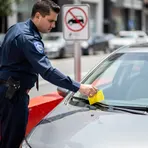
Make someone pay money as punishment for breaking a law or rule
 60
5.5
60
5.5
Punish someone or make them suffer a loss for breaking a rule
 2
3.1
2
3.1
To give an official notice that fines someone for breaking a law

Make someone pay money as a punishment for breaking a rule

To make someone pay a fine ordered by a court
Antonyms


How Punitive
- Formal
178
4.2
 821
1.0
821
1.0
- US
60
5.5
- Formal
1
3.8
∞
1.0
Surface Forms
Morphology
Both constituents contribute their literal meanings: 'impose' (to officially place or order) and 'fine' (a monetary penalty), so the phrase straightforwardly means to order someone to pay a penalty. This compositional pattern is common cross-linguistically and the article 'a' is semantically neutral, making the MWE immediately understandable to learners who know the parts.
Etymology
Impose a fine comes from the simple image of an authority 'putting' a cost on someone: impose means to place or put on, and fine is the money set as punishment. So to impose a fine means to order someone 'to pay a financial penalty'.