
idiopathic thrombocytopenic purpura
- noun
- /ˌɪdiəˈpæθɪk θrɒmbəʊsɪtəʊˈpɛnɪk ˈpɜːrpjʊrə/
- Specialized
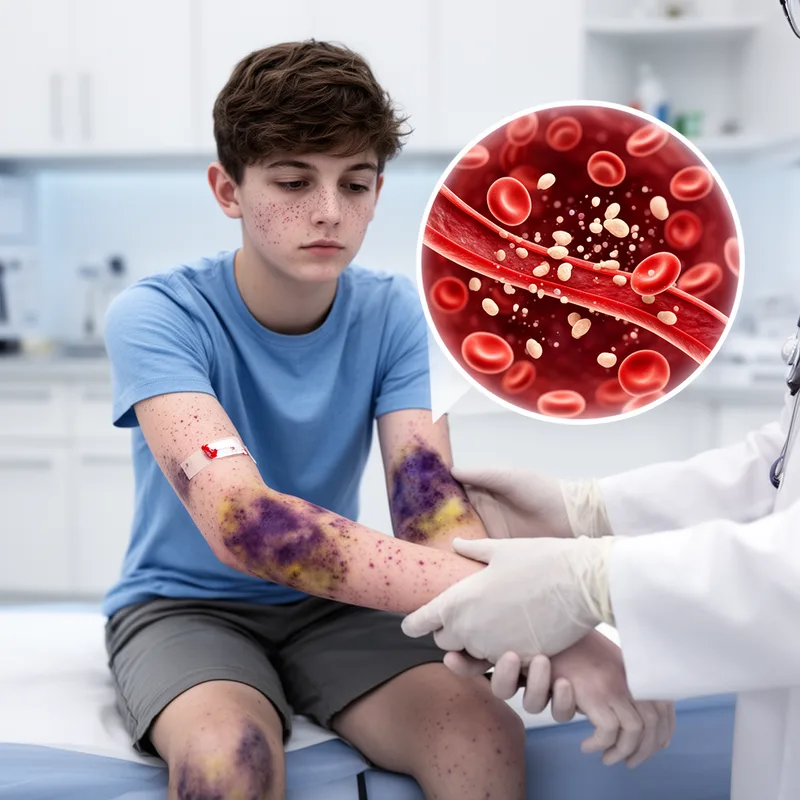
- Symptoms of idiopathic thrombocytopenic purpura include easy bruising and bleeding, caused by a reduction in blood platelets.
Examples
-
Background: Diagnosis and management of idiopathic thrombocytopenic purpura (ITP) have been based primarily on expert opinion and practice guidelines rather than on evidence.
Academic text (2001) -
Management of childhood idiopathic thrombocytopenic purpura (ITP) is based more on opinion and local practices than on evidence and has been the subject of fierce debate for decades.
Academic text (2001) -
Doctors often see patients with idiopathic thrombocytopenic purpura, which leads to the appearance of purpura due to low platelet counts.
-
The patient was diagnosed with idiopathic thrombocytopenic purpura, which means the cause of her low platelet levels is unknown.
Synonyms

 1
9.9
1
9.9

A low number of small blood cells that help stop bleeding

Purple spots or bruises on the skin caused by low blood platelets

A condition in which the blood has too few platelets, causing easy bruising and bleeding

A low number of tiny blood parts that help stop bleeding

A blood disorder with very few platelets, the tiny blood parts that stop bleeding, not caused by another disease
Surface Forms
Morphology
idiopathic + thrombocytopenic + purpura
Each component directly contributes to the overall sense: 'idiopathic' = of unknown cause, 'thrombocytopenic' = relating to low platelet counts, and 'purpura' = purple skin spots from bleeding. Put together the phrase transparently denotes purpura caused by thrombocytopenia of unknown origin; although technical, the meaning is fully compositional and predictable to a learner who knows the constituent words.
Etymology
Idiopathic thrombocytopenic purpura comes from older words: idiopathic meaning 'unknown cause', thrombocytopenic meaning 'few platelets', and purpura meaning 'purple spots' on the skin. So the name shows purple bruises from low platelets with no known cause, which is what the condition means today.