

thrombocytopenic purpura
- noun
- /ˌθrɑːmboʊsaɪtəˈoʊpənɪk ˈpɜːrpjʊrə/
- Specialized
- She was treated for thrombocytopenic purpura, which caused her skin to develop bruises easily due to low platelet levels.
- idiopathic thrombocytopenic purpura
Examples
-
Laparoscopic splenectomy is a real alternative to conventional splenectomy for some hematologic diseases, particularly idiopathic thrombocytopenic purpura and hemolytic anemia.
Academic text (2007) -
We describe a case of active SLE complicated by thrombotic thrombocytopenic purpura (TTP) in a 21-year-old woman and discuss the neurological and radiological findings.
Academic text (2007) -
Background: Diagnosis and management of idiopathic thrombocytopenic purpura (ITP) have been based primarily on expert opinion and practice guidelines rather than on evidence.
Academic text (2001) -
Management of childhood idiopathic thrombocytopenic purpura (ITP) is based more on opinion and local practices than on evidence and has been the subject of fierce debate for decades.
Academic text (2001) -
The patient was diagnosed with thrombocytopenic purpura after experiencing unusual bleeding and purple spots on her skin.
-
Doctors confirmed that his thrombocytopenic purpura was responsible for the significant drop in his platelet count.
Synonyms
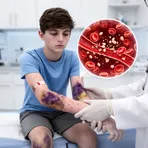
A condition that causes easy bruising and bleeding because the blood has very few platelets for no known reason

A condition in which the blood has too few platelets, causing easy bruising and bleeding
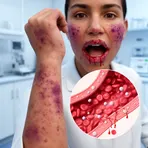
Widespread bleeding into the skin and inside the mouth when blood cells that stop bleeding are low
How Many Platelets
- Specialized

- Specialized
Surface Forms
Morphology
The term is a straightforward compositional medical compound: 'thrombocytopenic' means having abnormally low platelet levels and 'purpura' denotes purple skin spots from bleeding, so the overall meaning (purple skin discoloration due to low platelets) is directly derivable from the parts. Although the vocabulary is technical, the morphological logic is transparent and commonly used in medical terminology (and mirrored in other languages), so a learner who knows both constituents will understand the MWE.
Etymology
The medical name thrombocytopenic purpura comes from the parts thrombocytopenic and purpura, which mean 'few blood platelets' and 'purple spots'. Very low platelets, the small blood cells that help stop bleeding, cause purple bruises or spots on the skin, so the name describes that condition.

