
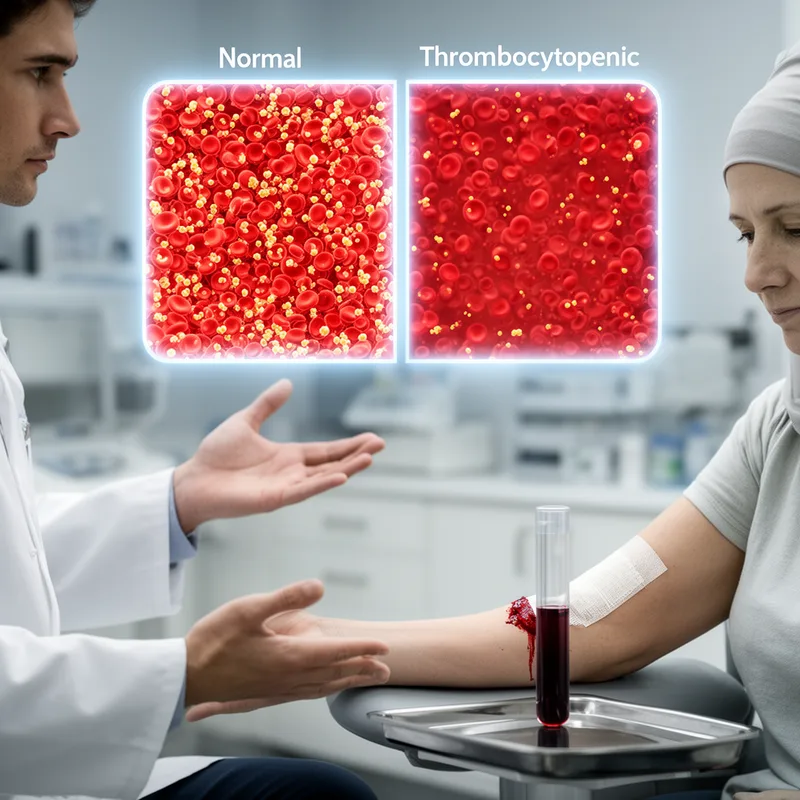
thrombocytopenic
- adjective
- /ˌθrɑːmboʊˌsaɪtəˈoʊpɪnɪk/
- Specialized
- A thrombocytopenic patient may need regular blood tests to monitor platelet levels.
Examples
-
After chemotherapy, some patients become thrombocytopenic and require special care.
-
The patient was diagnosed as thrombocytopenic last week.
-
The doctor explained that a thrombocytopenic condition could increase the risk of bleeding.
-
Is she thrombocytopenic or does she have another condition?
-
The doctor explained that a thrombocytopenic condition could increase the risk of bleeding.
-
After chemotherapy, many patients may become thrombocytopenic and require close monitoring.
-
A thrombocytopenic patient often needs transfusions to manage low platelet counts.
Compounds

- Specialized
A condition that causes easy bruising and bleeding because the blood has very few platelets for no known reason

- Specialized
Purple spots or bruises on the skin caused by low blood platelets
How Many Platelets


Surface Forms
Morphology
thrombocytopenic = thrombocytopenia (opaque) = thrombo + cyto + penia + ic
The adjective is formed by regular suffixation (-ic) from the medical noun 'thrombocytopenia'.
Etymology
Thrombocytopenic breaks into thrombo- 'clot', cyto- 'cell', and -penia 'lack'. So it describes having too few platelets, the small blood 'cells' that help stop bleeding, which is why a thrombocytopenic condition makes bleeding more likely.