

hemipterous insect
- noun
- /ˌhɛmɪˈptɛrəs ˈɪnˌsɛkt/
- Specialized
- That is, the ants care for hemipterous insects, such as scale insects and aphids, which produce sugary food in exchange for protection and other favors.
Examples
-
Many garden pests are hemipterous insects, like aphids, which feed on plant sap using their specialized mouthparts.
-
The study focused on the ecological impact of hemipterous insects, including their roles in pollination and pest control.
-
Farmers sometimes introduce hemipterous insects to control pests in their crops due to their unique feeding habits.
Synonyms

 623
1.0
623
1.0

A small insect like an ant or beetle


 1
8.1
1
8.1
An insect with a thin mouth that pierces and sucks fluids, like a water strider
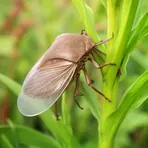
An insect with a long mouth for sucking plant juices and front wings partly hard at the base

An insect with a tube-like mouth that sucks plant juices and front wings partly hard, like an aphid or cicada

A group of insects like aphids and cicadas that pierce and suck plant sap or animal blood
Surface Forms
Morphology
hemipterous + insect
The adjective 'hemipterous' is a technical, low-frequency taxonomic term (not glossed in the input) whose meaning (membership in Hemiptera; specialized mouthparts and partly leathery forewings) is not transparently derivable by a B1 learner from the word 'insect' alone. Because the modifier is specialized and morphologically opaque to average learners, the overall phrase's meaning would not be predictable from its parts.
Etymology
Hemipterous insect comes from Greek roots hemi ('half') and pterous ('wing') because their front wings are hard at the base and softer at the tip, so they look like 'half' wings. That's why hemipterous insect is used for bugs like aphids and shield bugs that have a sucking mouth and partly hardened front wings.