
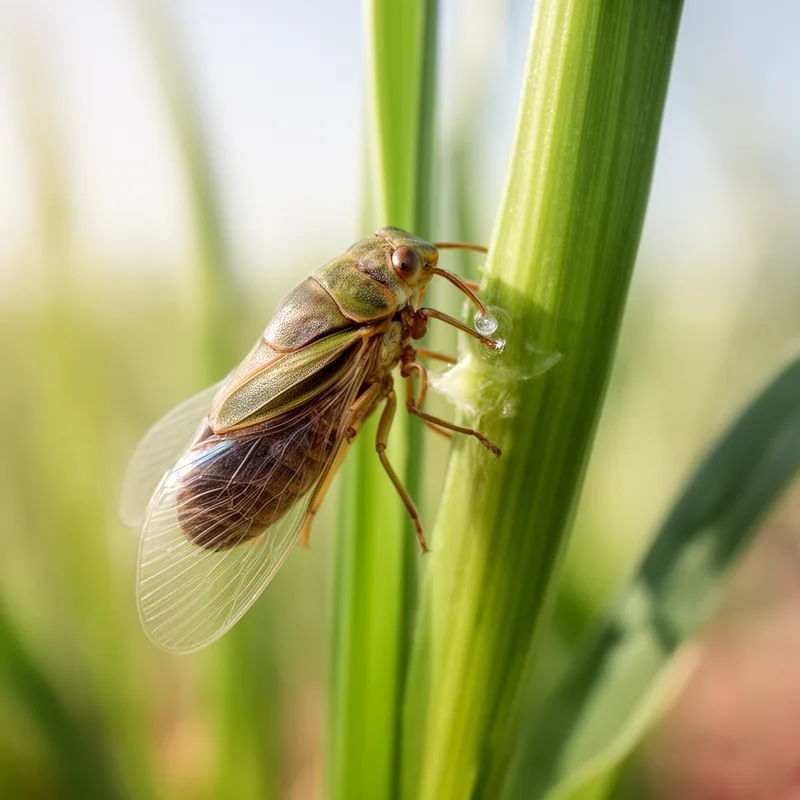
hemipteron
- noun
- /ˌhɛmɪˈptɛrən/
- Specialized
- The hemipteron feeds by piercing plant tissues with its specialized mouthparts.
Examples
-
Scientists discovered a new species of hemipteron in the Amazon rainforest.
-
Aphids, a type of hemipteron, can cause significant damage to crops.
-
The hemipteron feeds by piercing plant tissues with its specialized mouthparts.
-
The hemipteron is known for its unique mouthparts.
-
Did you see that hemipteron on the leaf?
-
Aphids, a type of hemipteron, can cause significant damage to crops.
-
Scientists discovered a new species of hemipteron in the Amazon rainforest.
Synonyms

 623
1.0
623
1.0

A small insect like an ant or beetle
 341
1.0
341
1.0
A small animal with a body in three parts, six legs and often wings


 1
8.1
1
8.1
An insect with a thin mouth that pierces and sucks fluids, like a water strider
An insect with a long mouth for sucking plant juices and front wings partly hard at the base

An insect that sucks plant sap, with a long tube mouth and hard front wings at the base
Surface Forms
Morphology
hemipteron = Hemiptera (opaque) = hemi + pteron
A specialized taxonomic term composed from Greek combining forms; knowing 'hemi' or 'pteron' does not let an average B1 learner infer the biological meaning.
Etymology
The word hemipteron comes from the Greek parts hemi- and pteron, meaning 'half' and 'wing', and you may know hemi- from hemisphere. So these insects are like 'half-wing' bugs because their front wings are partly hard and partly soft, a feature that helps identify them.