

true bug


 1
8.1
1
8.1
- noun
- /tru bʌg/
- Specialized
- Most, but not all, true bugs have leathery-looking forewings that fold back on the body.
- true bugs and wasps
Examples
-
All true bugs have beaklike mouthparts designed for sucking juices from plants or animals.
-
These insects are also in the group of "true bugs" (Hemiptera) and are predatory, but they look nothing like beetles.
Academic text (1993) -
These insects resemble beetles somewhat but are really "true bugs," or hemipterans.
Academic text (1993) -
Backswimmers are aquatic insects that may be mistaken for beetles, but are, like the water boatmen, really in the order of "true bugs" (Hemiptera).
Academic text (1993) -
These insects resemble beetles somewhat but are really true bugs, or hemipterans.
Synonyms
 623
1.0
623
1.0
A small insect like an ant or beetle
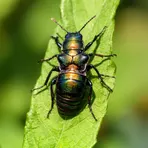 341
1.0
341
1.0
A small animal with a body in three parts, six legs and often wings

An insect whose front wings are partly hard and partly soft, not fully hard like a beetle

An insect that sucks plant sap, with a long tube mouth and hard front wings at the base
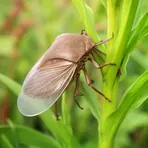
An insect with a long mouth for sucking plant juices and front wings partly hard at the base

An insect with a tube-like mouth that sucks plant juices and front wings partly hard, like an aphid or cicada
Surface Forms
Morphology
The phrase is a literal adjective+noun combination where 'true' qualifies 'bug' as a genuine/real insect, so a learner who knows both words will understand it denotes an actual insect. Although in biology it can refer specifically to Hemiptera (a narrower taxonomic sense), the basic composed meaning is transparent and immediately accessible to B1 learners.
Etymology
True bug is a name scientists used to mark the 'real' bugs, not every insect. They used true to mean the exact kind of bug: insects with a straw-like mouth that suck plant juices, so today true bug means that specific group of insects rather than any 'bug'.