

helminth
 1
9.8
1
9.8

- noun
- /ˈhɛlmɪnθ/
- Specialized
- Some forms of helminths, such as tapeworms, can cause serious digestive issues in humans.
- helminth infections
- helminth ova
- soil-transmitted helminths
Examples
-
In contrast to the pronounced signs and symptoms of atopic conditions (such as asthma) or anaphylaxis, most helminth infections have subclinical or asymptomatic presentations.
Academic text (2016) -
More than one dozen different species of soil-transmitted helminths infect humans, especially in the tropical and subtropical parts of the developing world.
Academic text (2007) -
The significance of helminth infestation has increased manyfold in developing countries.
Academic text (2014) -
For basic diagnosis, specific helminths and eggs can generally be identified from the faeces.
Academic text (2012) -
Co-infection with helminths and bacteria or viruses is common in the developing world.
Academic text (2016) -
We conclude that treatment of helminth infections in school-age children may improve growth in areas where malnutrition and helminth infections are prevalent.
Academic text (2007) -
Soil-transmitted helminths live in the intestine, where they produce thousands of eggs each day that are passed in the feces.
Academic text (2012) -
Of the 510 children examined, 86 (16.9%, 95% CI, 9.38-24.34%) had helminth infections.
Academic text (2007) -
Whipworms, hookworms, tapeworms, and giant roundworms are all examples of helminths that may infect the returning traveler.
Academic text (2012) -
Many children in tropical regions are affected by helminths that infect their intestines.
Synonyms
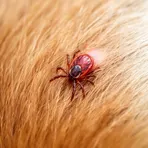 111
4.2
111
4.2
A living thing that lives on or inside another living thing and takes food from it
 15
5.2
15
5.2
A long flat creature that lives inside the intestines of people or animals
 4
7.0
4
7.0
A soft worm with a flat body that lives inside other animals or on the sea floor
 4
8.6
4
8.6
A small worm with a long smooth body that lives in soil or water
 3
5.5
3
5.5
A long round animal pointed at both ends that sometimes lives as a parasite
 2
7.0
2
7.0
A very small thin animal that lives in the intestines of children


 1
4.4
1
4.4
A small animal that lives inside another animal and takes its food, often causing sickness
 1
9.9
1
9.9
A flat worm that lives inside animals or in water
 1
8.1
1
8.1
A small worm that lives in the intestines of people, especially children

A small animal that lives inside another animal's body, usually as a worm in the intestines

A parasite that lives inside an animal's body, often in the intestines

A parasite that lives inside an animal's body, often in the intestines

A parasite that lives inside an animal's body, often in the intestines

Wormlike parasites with spines that live in animal intestines

A parasite that lives in animal intestines and can pull its spiny head back to hold on

A long flat worm that lives in the gut and infects people who eat raw or undercooked fish

Small tapeworms that live in animal intestines and cause disease

A very small thin animal with a pointed body that lives in soil or inside other living things

A worm that lives in human and pig intestines and makes them sick

Large round worms that live in the intestines of animals and sometimes people

A small worm called a whipworm that lives in the intestines of mammals and can make them sick

A small round worm that lives in the intestines of farm animals

A small thin worm that lives in the human intestine and causes itching around the anus

A small thin worm that lives in people's gut, often in children, and causes itching
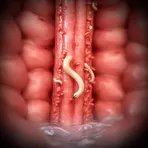
A small worm that lives in the intestines of animals, including people
Surface Forms
Etymology
Helminth comes from an old Greek word helminthos meaning 'worm'. That's why helminth refers to worms that live inside the body, especially in the intestines.