
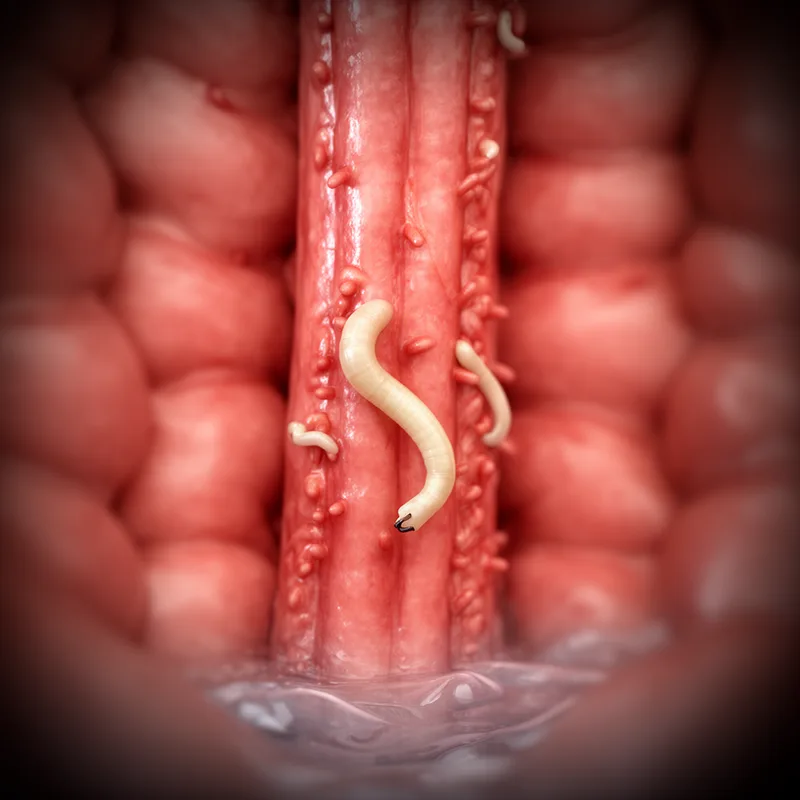
Ancylostoma
- noun
- /ˌæŋsɪˈloʊstəˌmoʊ/
- Specialized
- The parasite Ancylostoma can cause severe anemia in its hosts by feeding on their blood.
Examples
-
Doctors can diagnose an Ancylostoma infection through stool tests to find the eggs of the worm.
-
In areas with poor sanitation, Ancylostoma infections are common among pets and livestock.
-
Ancylostoma will needle into the intestine, piercing the wall and lodging there for years to suck human blood.
Fiction book (2001)
Synonyms
 4
6.0
4
6.0

A small worm with a hooked mouth that lives in human or animal intestines and drinks blood
 1
9.8
1
9.8
A worm that lives inside the body of animals or people and causes illness

A parasite that lives inside an animal's body, often in the intestines

A small animal that lives inside another animal's body, usually as a worm in the intestines
Surface Forms
Etymology
Ancylostoma comes from Greek parts ancyl- meaning 'curved' and -stoma meaning 'mouth'. It literally means 'curved mouth', which is a helpful image because these worms have a hook-like mouth they use to attach to the intestines of animals and people.