
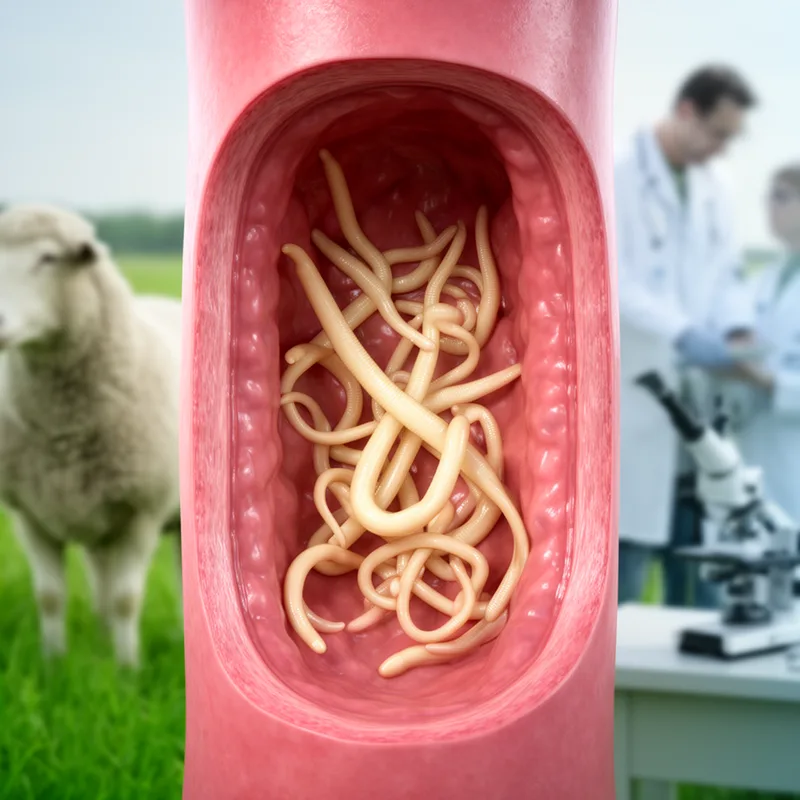
trichostrongyle
- noun
- /ˌtrɪkoʊˈstrɒŋɡaɪl/
- Specialized
- Regular deworming is essential to prevent trichostrongyle infestations in livestock.
Examples
-
The farmer noticed a sudden drop in milk production due to a trichostrongyle infection in his herd.
-
That established a phylogenetic and biogeographic link between the host and parasite faunas of the Old and New Worlds that has been significant for the evolution of trichostrongyle nematodes of ruminants over the past 20 million years.
Academic text (1996) -
Veterinarians often study trichostrongyle parasites to develop better treatments for infected animals.
Synonyms

 3
5.5
3
5.5

A long round animal pointed at both ends that sometimes lives as a parasite
 1
9.8
1
9.8
A worm that lives inside the body of animals or people and causes illness

 1
7.4
1
7.4
A small animal that lives in the gut of dogs and people and causes sickness
A small worm that lives in animals' intestines and makes them sick
Surface Forms
Etymology
Trichostrongyle comes from Greek parts tricho- ('hair') and strongyle ('round'). So it literally means a thin, hair-like round worm, which is why the word is used for small parasitic worms that live in the intestines of farm animals.