

heat unit


 1
5.3
1
5.3
- noun
- /hit ˈjuːnɪt/
- Specialized
- Furthermore, a carbon tax will reduce emissions of CO2 by inducing substitution of fuels that emit less CO2 per heat unit.
- CO2 per heat unit
- more CO2 per heat unit
Examples
-
The entire apple country, he explained, could be quantified and mapped in terms of "heat units" -- a measurement, in essence, of the amount of heat in an orchard during a given day -- a piece of information so vital to growers that it is broadcast throughout the growing season on local radio stations.
Fiction book (1999) -
The Scoville heat unit measures the spiciness of peppers based on the heat they produce.
-
And that gives you the exact Scoville heat units of that pepper sample.
-
Because coal is much less expensive per heat unit than oil or natural gas, a carbon tax increases the price of coal relative to oil or natural gas by a ratio much greater than the emission rate of coal relative to oil or natural gas.
Academic text (1991) -
The more "heat units" accumulated, the more OHC (all other things being equal, of course), and thus a warming influence on the atmosphere.
Blog text (30) -
Oil emits 40% more carbon per heat unit than natural gas (Manne and Richels, 1990).
Academic text (1991) -
Most simply, electricity and thermal heat from e.g., coal or oil have a great difference in their ability to do work, such as we are willing to trade three or four heat units of coal or oil in a thermal plant for one thermal unit of higher quality electricity.
Blog text (5) -
Because the combustion of coal emits more CO2 per heat unit than oil, which emits more CO2 per heat unit than natural gas, the tax on coal would be larger than the tax on oil, which would be larger than the tax on natural gas.
Academic text (1991) -
Because the combustion of coal emits more CO2 per heat unit than oil, which emits more CO2 per heat unit than natural gas, the tax on coal would be larger than the tax on oil, which would be larger than the tax on natural gas.
Academic text (1991) -
To understand the heat units in cooking, one must learn how different ingredients contribute to the overall temperature.
Synonyms
 124
3.4
124
3.4
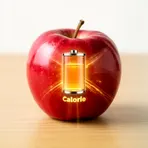
A measure of how much energy food gives
 9
6.1
9
6.1
A measure of heat energy used for heaters and air conditioners
 1
8.8
1
8.8
A unit for measuring natural gas equal to 100,000 British thermal units
 1
3.0
1
3.0
A way to measure energy, like a calorie or joule
 1
6.8
1
6.8
A unit of heat equal to the heat needed to raise one pound of water by one degree Fahrenheit
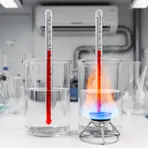
A unit of heat equal to the amount needed to raise one pound of water by one degree Fahrenheit

A unit of energy used to measure the heat or cooling power of fuels and heaters like air conditioners

The amount of energy that raises one kilogram of water by one degree Celsius, used to measure food energy

A measure of food energy equal to the heat needed to warm 1 kilogram of water by 1 degree Celsius
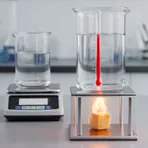
A unit of heat to raise one kilogram of water by one degree Celsius, often used for food energy

Amount of heat that raises one gram of water by one degree Celsius at normal air pressure

A standard amount of energy used to measure work, for example the joule
Surface Forms
Morphology
The meaning ‘a unit of measurement for heat energy’ is directly and predictably built from 'heat' (thermal energy) + 'unit' (a measure), so a learner who knows both words can derive the MWE meaning. This noun–noun compound follows a common compositional pattern found across languages and in technical registers (e.g., 'energy unit', 'power unit'), making it transparent to a B1 learner.
Etymology
Heat unit comes from the need for a simple, standard 'amount' of heat that people could compare, and the word unit shows it is one fixed amount used for measuring. For example, an early 'heat unit' was the 'calorie', the heat needed to raise a small amount of water by one degree, so today a heat unit means any standard measure of heat energy.