

to grime


 1
6.6
1
6.6
- verb
- /ɡraɪm/
- The kid holds out a palm grimed from hours of solo handball.
- grimed face
Loading YouTube…
Watch on YouTubeYeah, you could, you could grime it up on Kilo dog bag.
- Yeah, you could, you could grime it up on Kilo dog bag.
Examples
-
After a long day of playing outside, the children managed to grime their clothes with mud.
-
The face was grimed with dirt and tears.
Fiction book (1991) -
She pointed at the soot-grimed smoke hole overhead.
Fiction book (1990) -
Here I stand talking to mere mooncalves, Uncle Pumblechook waiting, and that boy grimed with dirt from his head to his feet.
-
Tears washed white channels down his dark-grimed face, the blacksmith's son shouted the warning into his mother's ear.
Fiction book (2002) -
A sleeping bag lay unrolled on a canvas cot below the room's single uncurtained window, the panes be-grimed.
Fiction book (1997) -
I look up, my eyes clouded, my face carefully grimed, my hair clotted by grease and soil, groomed from the flowerbed outside my window.
Fiction book (2001) -
The yellow light danced off the soft furs that cushioned her and shivered the shadows of the bundles that hung from the smoke-grimed roof.
Fiction book (1992) -
She tried to grime the window by smearing her dirty hands all over it.
-
The mechanic's hands were grimed with grease after working on the old engine.
Synonyms
 63
3.7
63
3.7
To spread a substance over a surface in a messy way
 59
4.5
59
4.5
To make something dirty with mud or dirt
 14
1.0
14
1.0
To make something unclean or covered with dirt
 13
6.5
13
6.5
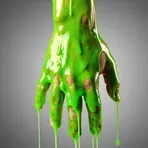
To cover something with a thick slippery substance
 5
1.9
5
1.9
Make something dirty with mud or sediment
 3
3.5
3
3.5
To make something dirty with mud
 1
9.9
1
9.9
To put a dirty mark on something like a dress or carpet
 1
5.1
1
5.1
To cover a surface with soft wet earth to make it smooth
 1
9.4
1
9.4
To cover something with dark dirt so it becomes dirty
 1
3.5
1
3.5
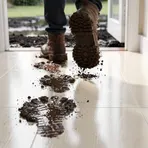
To make something dirty with wet dirt, for example shoes or floors

To stain something with black dirt or soot

To make something dirty with mud or dirt

To cover someone or something with mud
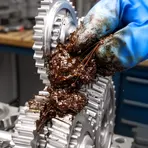
To make something dirty with a sticky or greasy substance

To make something look dirty or faded

To make something dirty or stained
Antonyms


How Dirty

Surface Forms
Etymology
The verb grime comes from the same old word grima meaning 'mask' or 'dark cover'. So to grime something is to 'cover' it with dirt, which is why the verb means to make something dirty.