
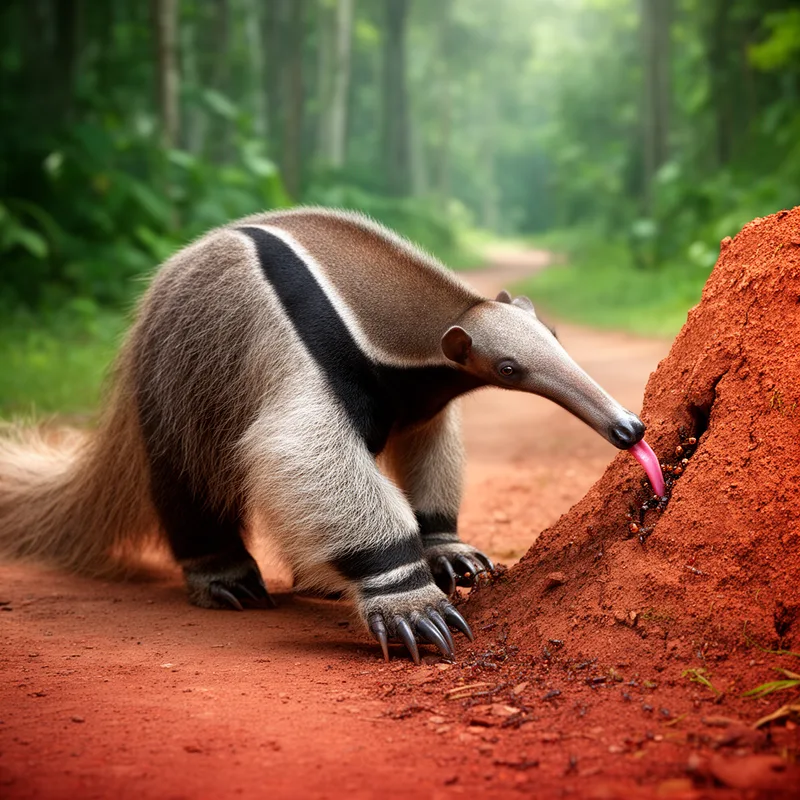
giant anteater
- noun
- /ˈdʒaɪənt ˈæntiˌtɚ/
- US
 :
oso hormiguero gigante
:
oso hormiguero gigante
- The giant anteater uses its long tongue to eat ants and termites from their nests.
Examples
-
The giant anteater uses its long tongue to extract ants and termites from nests.
-
Unlike other anteaters, the giant anteater spends most of its time on the ground.
-
We saw a giant anteater slowly crossing the dirt road in the rainforest.
-
The giant anteater is a fascinating creature.
-
Have you ever seen a giant anteater in the wild?
-
In the rainforest, the giant anteater can be seen foraging for food near termite mounds.
-
The giant anteater is known for its powerful claws, which help it dig for insects.
Synonyms

 2
2.0
2
2.0

A mammal from Central and South America with a long snout and tongue that eats ants and termites
A large South American animal with a very long nose and tongue that eats ants
A large hairy animal from South America that eats ants and termites with a long tongue

A large furry animal from South America with a long snout and tongue that eats ants
A large hairy South American mammal with a long tongue and strong claws for eating ants
Antonyms
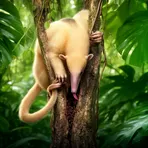
A small animal that eats ants and uses its tail to hold branches in Central and South American tropical forests
How Big

Surface Forms
Morphology
The meaning is directly and transparently derived from combining 'giant' (very large) with 'anteater' (a mammal that eats ants); the phrase simply denotes an unusually large anteater. This is a straightforward adjectival + noun composition following regular English patterns and has clear parallels in other languages, so a B1 learner who knows both constituents will understand it.
Etymology
Giant anteater gives a clear picture: a very large giant animal that 'eats ants', an anteater, using a long sticky tongue and strong claws to reach insect nests. So the name tells you what the animal is and what it does.