

Myrmecophaga jubata
- noun
- /ˌmɪr.mɪ.kəˈfɑː.ɡə dʒuˈbɑː.tə/
- Specialized
- Researchers are studying the eating habits of Myrmecophaga jubata in its natural habitat.
Examples
-
The Myrmecophaga jubata is easily recognized by its elongated snout and bushy tail.
-
A documentary featured the powerful claws of Myrmecophaga jubata as it searched for ants.
-
The Myrmecophaga jubata is known for its impressive size.
-
Did you see the Myrmecophaga jubata at the zoo?
-
In the Amazon rainforest, the Myrmecophaga jubata uses its long tongue to extract ants from their nests.
-
The Myrmecophaga jubata is a unique mammal that relies on its powerful claws to dig into ant hills.
-
Visitors were excited to see the Myrmecophaga jubata during their tour of the wildlife sanctuary.
Synonyms
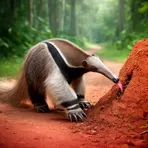
A large mammal from South America with a long tongue and claws that eats ants and termites
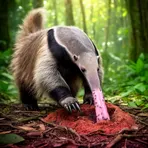
A large hairy South American mammal with a long tongue and strong claws for eating ants

A large furry animal from South America with a long snout and tongue that eats ants
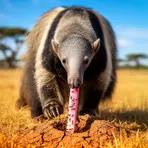
A large hairy animal from South America that eats ants and termites with a long tongue
Surface Forms
Morphology
Myrmecophaga + jubata
This is a Latin binomial (scientific) name rather than a compositional English phrase; a B1 learner who 'knows' the listed constituents would not be able to infer the common-species meaning 'giant anteater' because species epithets are arbitrary without specific biological knowledge. Although 'Myrmecophaga' may hint at an insect‑eating mammal to someone with taxonomic or classical-language knowledge, 'jubata' is not interpretable for learners and the full referential meaning is not derivable from the parts.
Etymology
Myrmecophaga jubata comes from old Greek and Latin words: myrmeco and phaga mean 'ant eater', and jubata means 'with a mane'. So imagine a big, shaggy animal with a long snout eating ants — that picture explains the name for the giant anteater.

