

ant bear
- noun
- /ˈænt bɛr/
- The ant bear is also known as the giant anteater.
Examples
-
The ant bear uses its long tongue to extract insects from nests.
-
Researchers observed an ant bear foraging in the rainforest.
-
The ant bear is known for its long tongue.
-
We saw an ant bear during our trip to Brazil.
-
While exploring the savanna, we spotted an ant bear digging for termites with its powerful claws.
-
In the Amazon rainforest, the ant bear can be seen using its long tongue to eat ants and other insects.
-
An ant bear ambled across the landscape, searching for food in the underbrush.
Synonyms

 2
2.0
2
2.0

A mammal from Central and South America with a long snout and tongue that eats ants and termites
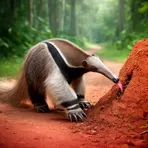
A large mammal from South America with a long tongue and claws that eats ants and termites

A large furry animal from South America with a long snout and tongue that eats ants
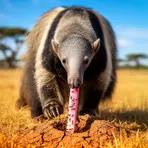
A large hairy animal from South America that eats ants and termites with a long tongue
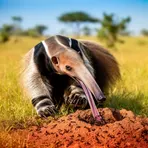
A large South American animal with a very long nose and tongue that eats ants

A tropical American animal with no teeth that eats ants and termites
Surface Forms
Morphology
ant + bear
A B1 learner who knows 'ant' and 'bear' would naturally interpret 'ant bear' as an animal associated with ants — i.e., an animal that eats or lives on ants/termites. The compound follows a straightforward noun + animal pattern (like 'anteater' or other language equivalents), so the basic meaning is directly derivable from the constituents.
Etymology
Ant bear may come from early South American explorers who saw a shaggy animal with a long snout and tongue that 'eats ants'. Because it looked a little like a small bear, they called it ant + bear, and that image explains why the name now means the giant anteater.