
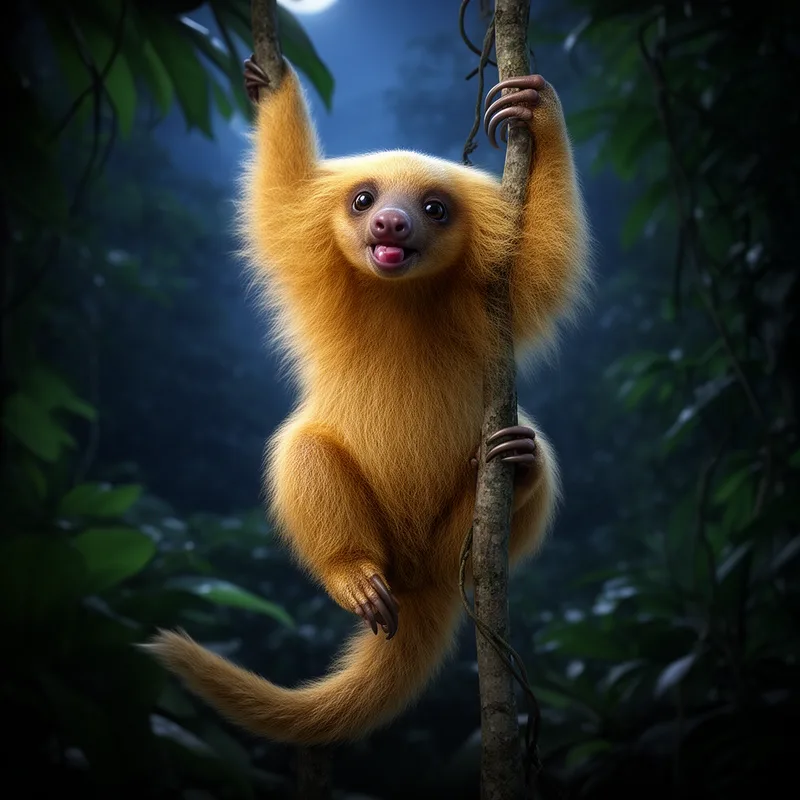
silky anteater
- noun
- /ˈsɪlki ˈæntiˌtɚ/
- Scientists observed a silky anteater feeding at night in the Amazon.
Examples
-
The silky anteater is a fascinating creature.
-
With its long golden fur, the silky anteater blends perfectly into its surroundings.
-
The silky anteater is rarely seen because it lives high in the rainforest canopy.
-
Have you ever seen a silky anteater in the wild?
-
The silky anteater uses its long, silky golden fur to blend in with the trees while foraging for insects.
-
In the rainforest, the silky anteater is often found curled up in branches, taking advantage of its small size.
-
Many people are surprised to learn that the silky anteater has no teeth, relying instead on its long tongue to catch food.
Synonyms

 2
2.0
2
2.0

A mammal from Central and South America with a long snout and tongue that eats ants and termites
A small South American anteater that lives in trees with long silky fur and no teeth

Small anteaters that live in trees in Central and South America and eat ants
A small South American animal that eats ants, with long golden fur and two claws on each front foot

A tropical American animal with no teeth that eats ants and termites
How Big

Surface Forms
Morphology
The meaning 'a type of anteater with silky fur' is directly and transparently derived from combining 'silky' (soft, smooth fur) with 'anteater' (a mammal that eats ants). This adjective+noun descriptive composition is a common, compositional pattern in English (and many other languages), so a B1 learner who knows both constituents will readily infer the meaning.
Etymology
Silky anteater is a compound name that comes from how the animal looks and what it eats: silky for its long, soft golden fur and anteater because it 'eats ants and termites' high in the trees, so the name tells you both its appearance and its diet.