

flagellate protozoan
- noun
- /fləˈdʒɛlɪt ˌproʊtəˈzoʊən/
- Specialized
 :
protozoo flagelado
:
protozoo flagelado
- The pond water sample contained several flagellate protozoans swimming among the algae.
Examples
-
Scientists observed the rapid movement of the flagellate protozoan under the microscope.
-
Some flagellate protozoans are responsible for diseases such as giardiasis and sleeping sickness.
-
The flagellate protozoan is often found in freshwater environments.
-
Some flagellate protozoa can cause diseases in fish.
-
Scientists observed the rapid movement of the flagellate protozoan under the microscope.
-
Some flagellate protozoans are responsible for diseases such as giardiasis and sleeping sickness.
-
The pond water sample contained several flagellate protozoans swimming among the algae.
Synonyms

 1
9.9
1
9.9

A tiny living thing made of one cell that moves with whip-like tails

A single-celled organism that moves using whiplike tails and sometimes causes disease in people
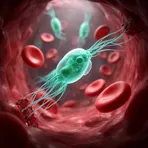
A single-celled animal that has whip-like tails and can cause disease in people or animals

A one-celled organism that moves with whip-like tails and can cause disease in animals or people

A tiny single-celled animal-like creature with a tail for movement that does not make its own food

A tiny single-celled animal-like creature that swims with a tail-like part and absorbs food
How Flagellated
- Specialized

- Specialized
Surface Forms
Morphology
The meaning 'a single-celled organism that moves using flagella' is directly and compositionally derived from 'flagellate' (having whip-like flagella) modifying 'protozoan' (a minute unicellular organism). This is a regular adjective+noun combination following transparent compositional patterns found across languages, so a B1 learner who knows both constituents should be able to infer the MWE meaning.
Etymology
Flagellate protozoan combines flagellate (having one or more whip-like tails called flagella) and protozoan (a 'single-celled' creature). So the name shows a tiny one-cell organism that swims by beating its whip-like tails.