

extrusive
- adjective
- /ɛkˈstruːsɪv/
- Specialized
- The difference between intrusive and extrusive rocks lies in where they solidify.
Examples
-
Geologists classified the ash deposit as extrusive because it originated from a volcanic eruption.
-
Basalt is an extrusive igneous rock commonly formed from rapidly cooled lava flows.
-
Basalt is an example of an extrusive rock.
-
The extrusive nature of this rock makes it very smooth.
-
Basalt is an example of an extrusive rock formed when lava cools quickly at the Earth's surface.
-
The formation of extrusive rocks occurs during volcanic eruptions, leading to fine-grained textures.
-
Geologists study how extrusive rocks, like pumice, are formed from lava that cools rapidly in the open air.
Synonyms

 1
4.1
1
4.1

Rock formed when lava or ash from a volcano cools
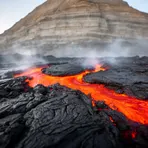
Rock made when hot lava or ash cools
Antonyms


How Fine-Grained

Surface Forms
Morphology
Etymology
Extrusive comes from the parts ex- 'out' and trudere 'to push', and is like the English verb extrude which means 'to push out'. So extrusive rocks are those 'pushed out' onto the Earth's surface as lava, which is why they cool quickly on the surface.