
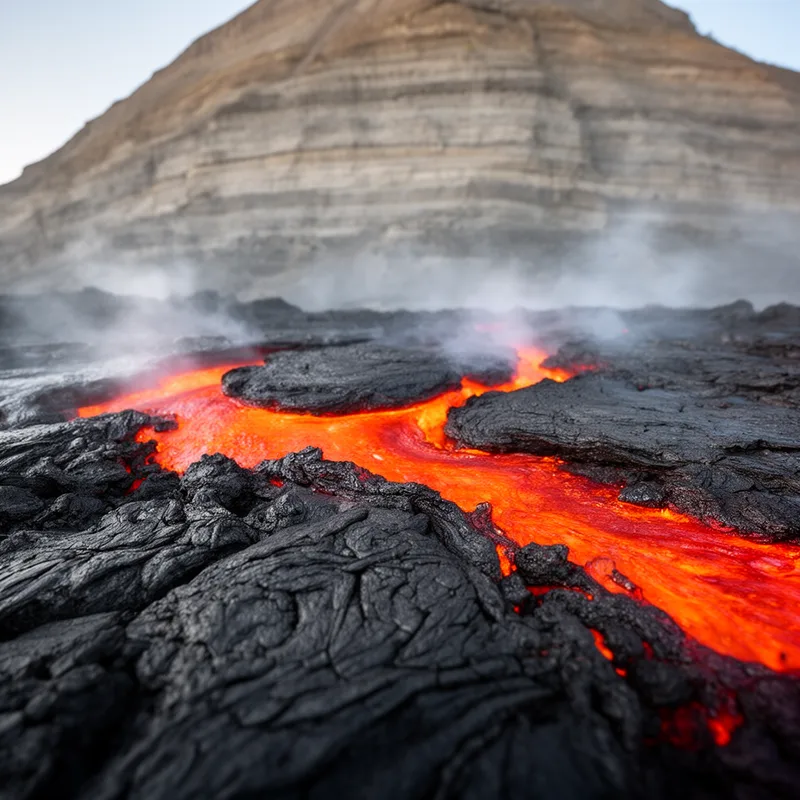
eruptive
- adjective
- /ɪˈrʌptɪv/
- Specialized
- The Hatepe eruptive sequence lasted about two weeks and did not undergo any major trace element compositional shift.
Examples
-
After the eruptive activity, the landscape was forever changed by layers of ash and debris.
-
Several of the eruptive deposits are modern-day building materials.
Academic text (2008) -
These estimates were supported by molecular dating of the formation of biogeographical barriers shaped by the eruptive events.
Academic text (2011) -
The eruptive nature of the volcano was evident as lava poured down its sides.
-
Scientists study eruptive rocks to understand the planet's volcanic history.
Synonyms

 4
7.4
4
7.4

Rock like granite that forms when hot, melted rock cools
 1
7.6
1
7.6
Relating to very hot liquid rock under the ground or things made from it

Rock that forms when lava from a volcano cools quickly on the ground, like basalt

Made by very high heat, for example in volcanoes
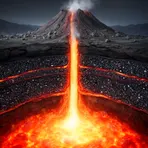
Formed by very high heat deep in the earth, often near volcanoes
Surface Forms
Morphology
Etymology
Eruptive comes from Latin erumpere (from e- 'out' + rumpere 'break'), meaning 'break out'. That fits eruptive rocks because they form when hot rock 'breaks out' of the earth and cools.