

pyrogenous
- adjective
- /ˌpaɪrəˈdʒɛnəs/
- Specialized
- Some minerals are classified as pyrogenous due to their origin in volcanic activity.
Examples
-
The pyrogenous rocks were formed during volcanic activity.
-
Many pyrogenous materials can be found near lava flows.
-
Geologists study pyrogenous layers to understand ancient volcanic eruptions.
-
The sudden formation of pyrogenous rocks transformed the landscape.
-
Geologists study pyrogenous layers to understand ancient volcanic eruptions.
-
Some minerals are classified as pyrogenous due to their origin in volcanic activity.
-
Many pyrogenous materials can be found near lava flows.
Synonyms

 79
3.9
79
3.9

Relating to volcanoes or the lava and ash they produce
 27
4.9
27
4.9
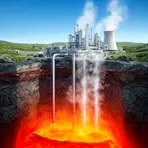
Heat from inside the Earth used to make power or heat buildings
 4
7.4
4
7.4
Rock like granite that forms when hot, melted rock cools
 1
7.8
1
7.8
Happening because of heat
 1
7.6
1
7.6
Relating to very hot liquid rock under the ground or things made from it


 1
7.4
1
7.4
Heat that comes from under the Earth's surface
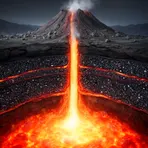
Formed by very high heat deep in the earth, often near volcanoes
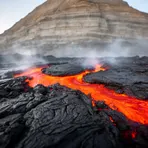
Rock made when hot lava or ash cools
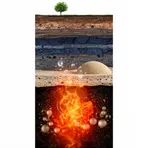
Formed by heat, often deep underground in rocks
How Heat-Formed

Surface Forms
Morphology
pyrogenous = pyro + gen + ous
The word is built from classical elements meaning roughly 'fire/heat' and 'produced', so the geological sense is partly inferable, but it remains a technical term rather than a fully transparent everyday formation.
Etymology
Pyrogenous comes from the root pyro- meaning 'fire' and the part -genous meaning 'produced', and you can see pyro- in words like pyrotechnics. So pyrogenous means 'made by fire', which is why geologists use it for rocks and substances formed under very high heat.