

to exsolve
- verb
- /ɛkˈsɒlv/
- Specialized
- The surface area of a bubble is larger during the dilatational phase of the pressure wave, when the volatiles exsolve from the fluid into the bubble, than during the compressional phase, when the volatiles dissolve back into the fluid.
- bubbles as volatiles exsolve
Examples
-
Bubbles are formed as volatile components in the magma exsolve.
Academic text (2002) -
As the molten rock cooled, it began to exsolve minerals, creating distinct layers in the formation.
-
And so for example, you're, you're really talking about clusters that exsolve as a separate phase.
-
As the magma in the chamber cools, crystals form and volatile compounds trapped within the remaining melt exsolve to form bubbles.
Academic text (2002) -
During the cooling process, gases can exsolve from magma, forming pockets of gas bubbles in the rock.
-
When the temperature drops, certain components will exsolve from the solid solution, leading to the formation of new mineral phases.
Synonyms

 70
4.1
70
4.1

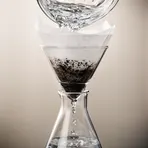
To get a substance from a plant or material by a special process
 7
3.7
7
3.7
Remove one part from a mixture using a filter or another method
Antonyms

How Separated

Surface Forms
Morphology
Etymology
Exsolve comes from the Latin parts ex- 'out' and solvere 'to loosen', the same root as in solve and dissolve. So to exsolve is to 'loosen out' and release a part from a solid, for example when small particles or gas come out of a rock or metal.