
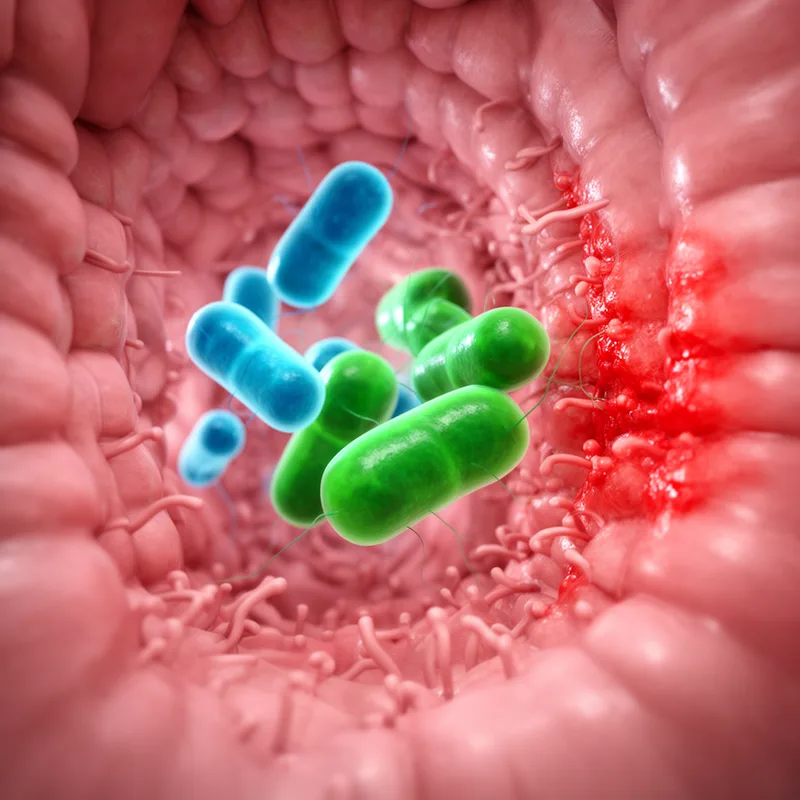
enterics
- noun
- /ˈɛn.tə.rɪks/
- Specialized
- Veterinarians often test for harmful enterics in animals to ensure their health.
Examples
-
Researchers analyzed the gut microbiome, which frequently contains beneficial enterics essential for digestion.
-
Some of them are worse than others as far as the enterics go.
Academic text (1999) -
The study focused on various strains of enterics that could cause food poisoning.
Synonyms


 1
9.9
1
9.9
A family of bacteria like E. coli or Salmonella that often live in the intestines and cause infections

Small germs that live in the intestines and often help digestion or sometimes cause infections

Bacteria with a long thin shape that live in the gut of people and animals, some cause infections

A large group of bacteria like E. coli and Salmonella that can cause infections
Surface Forms
Morphology
enterics = enteric (opaque) = enter + ic + s
The plural 'enterics' is a straightforward pluralization of 'enteric', but 'enteric' is built from the Greek combining form enter- ('intestine'), which is not a familiar standalone English morpheme and can be confused with the unrelated verb 'enter', so learners cannot reliably infer the meaning.
Etymology
The word enterics comes from the Greek root enteron, which means 'intestine' and gives the same idea behind intestinal. So enterics are bacteria that live in the gut, and some can cause digestive illness.