
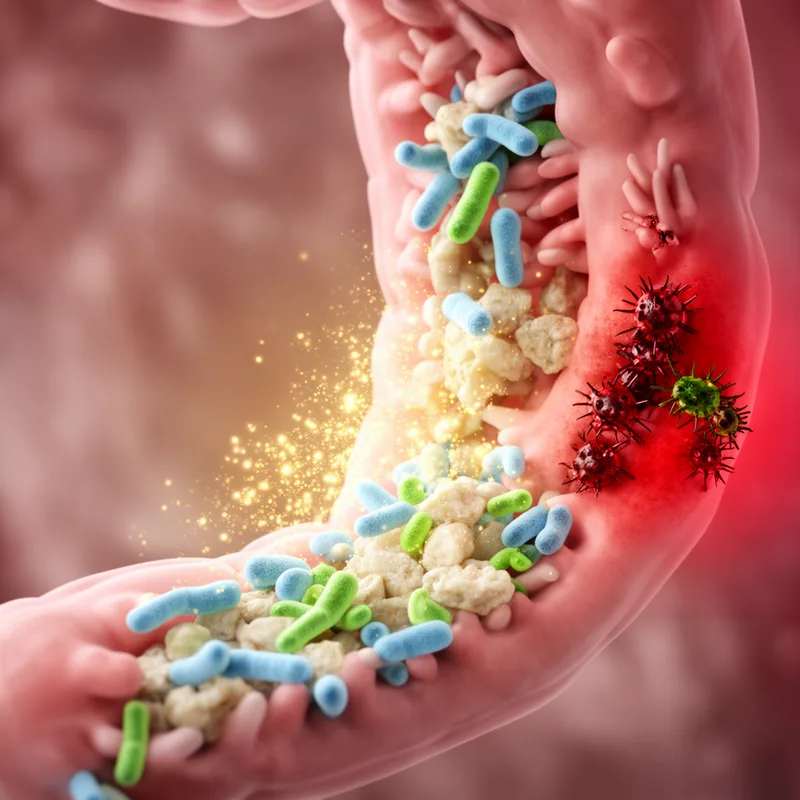
enteric bacteria
- noun
- /ˈɛn.tə.rɪk bækˈtɪr.i.ə/
- Specialized
- Certain enteric bacteria play a vital role in digestion and nutrient absorption.
Examples
-
Doctors are concerned about antibiotic resistance among enteric bacteria in hospitals.
-
When enteric bacteria escape the intestines, they can cause serious infections elsewhere in the body.
-
The study focused on enteric bacteria found in the human gut.
-
Many enteric bacteria are essential for digestion.
-
E. coli is an example of enteric bacteria that can be found in the intestines of humans and animals.
-
Many types of enteric bacteria play important roles in digestion and nutrient absorption within the gut.
-
Some enteric bacteria, like Salmonella, can cause foodborne illnesses when ingested.
Synonyms


 1
9.9
1
9.9
A family of bacteria like E. coli or Salmonella that often live in the intestines and cause infections

Bacteria with a long thin shape that live in the gut of people and animals, some cause infections

Bacteria shaped like rods that live in the gut and sometimes cause illness

A large group of bacteria like E. coli and Salmonella that can cause infections
Surface Forms
Morphology
The noun phrase is straightforwardly compositional: 'enteric' means 'pertaining to the intestines' and 'bacteria' are microorganisms, so the phrase denotes bacteria of the intestines. This adjective+noun pattern is regular and cross-linguistically common, so a B1 learner who knows both constituents should be able to infer the meaning.
Etymology
Enteric bacteria comes from an old Greek word for the 'intestine', so enteric bacteria literally means 'bacteria of the intestine'. That's why today it refers to bacteria that live in the gut and can be harmless or cause infection.