
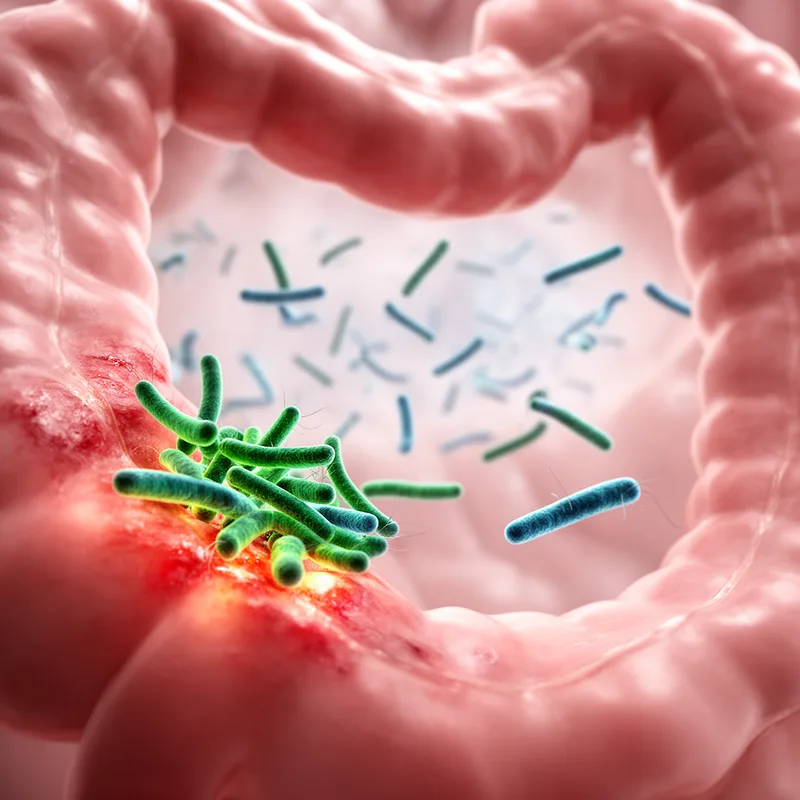
enterobacteria
- noun
- /ˌɛntəroʊbækˈtɪəriə/
- Specialized
- Enterobacteria can be found in the intestines of both humans and animals.
Examples
-
Researchers studied the effects of antibiotics on various enterobacteria in laboratory tests.
-
Species such as Enterobacteria, Serratia, Nitrobacter, Pseudomonads, Bacillus, Staphylococcus, and various Actinomycetes are all present.
Academic text (1996) -
GRAPH: Fig 2 - Isolation of pathogenic enterobacteria in the stool specimens from 473 subjects with or without diarrhoea.
Academic text (1992) -
Some enterobacteria are harmless, while others can cause serious infections.
Synonyms


 1
9.9
1
9.9
A family of bacteria like E. coli or Salmonella that often live in the intestines and cause infections

Small germs that live in the intestines and often help digestion or sometimes cause infections

Bacteria shaped like rods that live in the gut and sometimes cause illness

A large group of bacteria like E. coli and Salmonella that can cause infections
Surface Forms
Morphology
Etymology
Enterobacteria comes from the parts entero- meaning 'intestine' and bacteria from Greek bakterion meaning 'small rod'. So, enterobacteria are the rod-shaped bacteria that live in the gut.