

elimination reaction
- noun
- /ɪˌlɪməˈneɪʃən ˈriːækʃən/
- Specialized
- Chemists used an elimination reaction to convert the alcohol into an alkene.
Examples
-
The elimination reaction produced two distinct compounds.
-
Understanding the mechanism of an elimination reaction is crucial in organic synthesis.
-
An elimination reaction often produces an alkene and a small molecule such as water or hydrogen halide.
-
An elimination reaction occurs when a molecule loses atoms.
-
In an elimination reaction, water is removed from the reactants to form an alkene.
-
The elimination reaction of the alcohol produced an important product used in industry.
-
Sodium hydroxide is often used to facilitate the elimination reaction in organic synthesis.
Synonyms

A chemical reaction where one compound breaks into two or more different substances
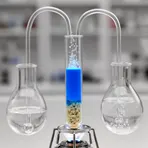
A reaction where one compound breaks into two or more simpler substances
Antonyms



Surface Forms
Morphology
The noun phrase transparently combines 'elimination' (removal) and 'reaction' (chemical process), so a B1 learner who knows both words can infer the core idea that it is a chemical process involving removal. However, the precise technical meaning—the mechanistic detail that a single molecule yields distinct products by loss of atoms or groups—is domain-specific and not fully predictable from the constituents, so full understanding requires specialized knowledge.
Etymology
The term elimination reaction comes from a simple picture: one molecule 'loses' a small part like water and becomes a new, simpler molecule. Elimination means 'removal' and reaction is a 'chemical change', so the name tells you the molecule loses parts during the change.