

electron tube
- noun
- /ˈɛlɛktrɒn tuːb/
- Archaic
- Many old radios use an electron tube for amplification.
Examples
-
Early televisions relied on electron tube technology for displaying images.
-
The electron tube was invented in the early 20th century.
-
Replacing an electron tube requires care due to its fragile glass structure.
-
The old radio was powered by several electron tubes that needed to warm up before use.
-
The electron tube was essential in early television sets to amplify the signals.
-
Before transistors became widely used, engineers relied heavily on electron tubes for radio communications.
-
Many vintage audio amplifiers still use electron tubes to produce a warm sound.
Synonyms

 65
8.8
65
8.8

An old glass part used in radios and sound equipment to make sound louder
 5
5.3
5
5.3
A glass or metal tube with empty space inside that controls electricity

A glass or metal tube that uses heat to make electricity flow without air
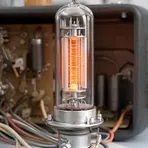
A glass or metal device that controls the flow of electricity in old radios and machines
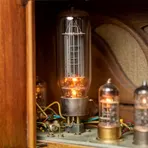
An electronic device in a sealed glass tube that controls electric current in old radios
Surface Forms
Morphology
The meaning is transparently compositional: an 'electron tube' is literally a tube/device associated with or containing electrons, derivable from 'electron' + 'tube' and the usual noun+noun compounding pattern in English. This construction is cross-linguistically common, so a B1 learner who knows both constituents will grasp the general device-related meaning (though they may not know all technical specifics).
Etymology
Electron tube shows a simple picture: a tube (a glass or metal pipe) where tiny particles called electrons move through empty space past metal parts. So, because the tube guides and changes the electrons' flow, the name came to mean a device that 'controls electric current'.