

dry gangrene
- noun
- /draɪ ˈɡæŋɡriːn/
- Specialized
- The doctor explained that dry gangrene occurs when there is insufficient blood flow to a part of the body.
Loading YouTube…
Watch on YouTubeOur passage till black and white hardens dry gangrene, bleached bone.
- Our passage till black and white hardens dry gangrene, bleached bone.
Examples
-
Patients suffering from dry gangrene often experience symptoms like numbness and dark discoloration of the affected area.
-
After the injury, the affected tissue developed dry gangrene, leading to a need for surgical intervention.
-
Our passage till black and white hardens dry gangrene, bleached bone.
Synonyms


 1
9.9
1
9.9
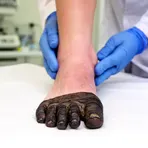
A type of gangrene where tissue becomes dry, shriveled, and dark from poor blood flow

Dead dry dark tissue on a body part that blood cannot reach
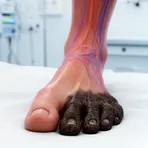
When blood stops flowing to a body part, the tissue dies and becomes dry and dark brown

To become dead tissue because of infection or loss of blood
Surface Forms
Morphology
The phrase is a straightforward adjective + noun combination: a B1 learner who knows 'dry' (not wet) and 'gangrene' (tissue death) can infer this refers to a type of gangrene characterized by dryness. While specific clinical details (e.g., arterial obstruction) are technical, the core meaning as a dry form of tissue death is directly derivable from the constituents and follows a common compositional pattern.
Etymology
Dry gangrene is a medical phrase that paints a clear picture: dry (not wet) and gangrene (a part of the body that has died). It happens when blood is blocked and the skin and tissue turn dark, dry and hard, so the term refers to 'dead, dry tissue' caused by 'poor blood flow'.