
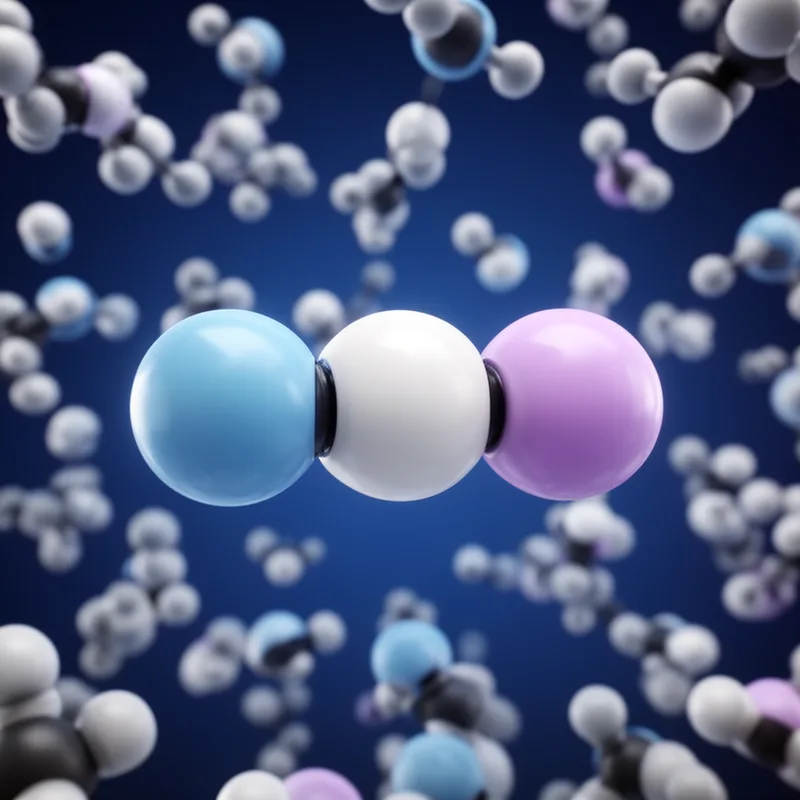
diatomic
 1
6.9

- adjective
- /ˌdaɪəˈtɒmɪk/
- Specialized
- A high energy ultraviolet photon will dissociate that diatomic oxygen into two oxygen atoms.
- diatomic molecule
Loading YouTube…
Watch on YouTubeThe chemical bonds holding the diatomic oxygen molecules together are broken so that each oxygen atom can then bond with two hydrogen atoms.
- The chemical bonds holding the diatomic oxygen molecules together are broken so that each oxygen atom can then bond with two hydrogen atoms.
- This is studied by people that look at diatomic molecules.
Examples
-
Over 99.9% of the nitrogen in global biogeochemical reservoirs is stored in a form inaccessible to almost all living organisms: diatomic nitrogen either in the atmosphere or in solution in the ocean.
Academic text (1994) -
Nitrogen and oxygen are diatomic molecules.
Blog text (18) -
So for example, nitrogen in the diatomic form is the dominant molecule in the Earth's atmosphere.
-
In general, the diatomic gases only absorb and radiate at short wavelengths (typically in the UV).
Blog text (18) -
New gases such as diatomic oxygen (O2), not present in the original terrestrial atmosphere, were added to the mix as photosynthetic organisms evolved.
Academic text (2004) -
When an element consists of two identical atoms, it is called a diatomic molecule.
-
Nitrogen in its natural state is a diatomic molecule that makes up most of the air we breathe.
-
Hydrogen gas exists as a diatomic molecule, which means it is formed by two hydrogen atoms bonded together.
How Many Atoms
- Specialized

 1
7.2

- Specialized
1
7.1
- Specialized
1
6.9
- Specialized
1
9.0
Surface Forms
Morphology
Etymology
The word diatomic comes from the parts di- meaning 'two' and atomic, from atom meaning 'a very small particle', so it describes a molecule made of two atoms.