
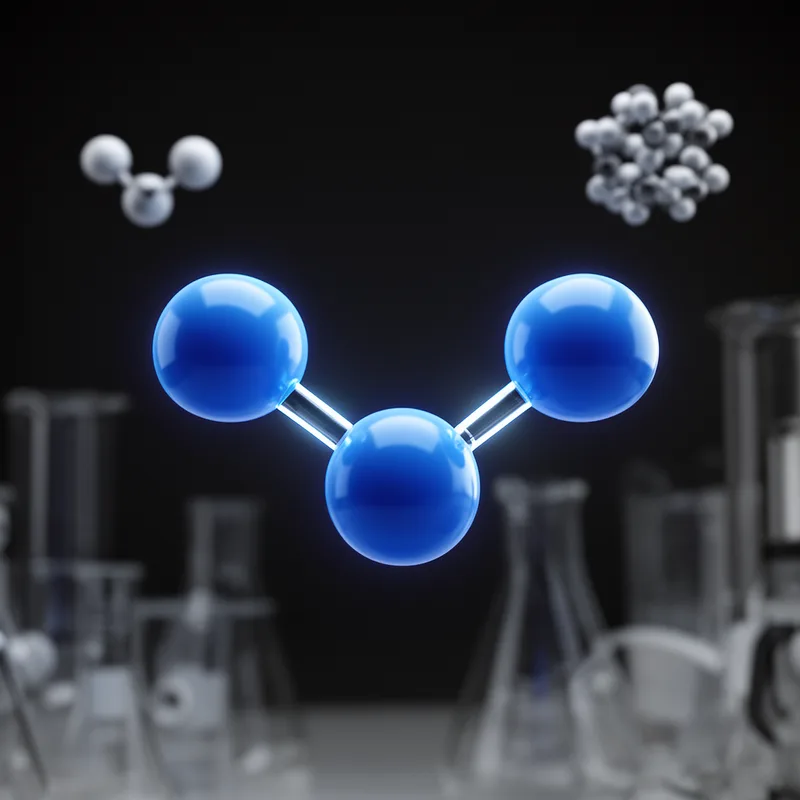
triatomic


 1
7.1
- adjective
- /ˌtraɪəˈtɒmɪk/
- Specialized
- Ozone is classified as a triatomic molecule due to its three-atom structure.
- triatomic molecule
Examples
-
Note, though, that many other molecules, including other triatomic molecules such as carbon disulfide (CS2), also form linked networks whose heat capacity far exceeds the heat capacity of one of their constituent molecules.
Academic text (2007) -
Supposedly, the diatomic gases have higher emissivities than the monoatomic gases, and both have far less emissivity than triatomic gases like CO2 and water vapor.
Blog text (18) -
On that basis, the heat capacity of water is about the same as that of other triatomic molecules.
Academic text (2007) -
The reason is that the molecular mass of water is small compared with that of other triatomic molecules.
Academic text (2007) -
Among the earliest—and most common—compounds to form, once the temperature drops below a few thousand degrees, are several familiar diatomic (two-atom) and triatomic (three-atom) molecules.
Academic text (2004) -
There's also the highly reactive triatomic molecule H₃, which is eager to feed its third proton to hungry neighbors, instigating further chemical trysts.
Academic text (2004) -
Water vapor is an example of a triatomic molecule because it consists of three atoms.
-
Many triatomic molecules, such as H2O and CO2, play significant roles in environmental chemistry.
Synonyms
 1
7.2
A molecule that has more than two atoms
How Many Atoms
- Specialized
1
7.2

- Specialized
1
7.1
- Specialized
1
6.9
- Specialized
1
9.0
Surface Forms
Morphology
Etymology
Triatomic comes from the prefix tri- meaning 'three', like in triangle or tricycle, and from atom meaning 'tiny part'. So a triatomic molecule or description is about something made of three atoms.