
depolymerization
- noun
- /ˌdiːˌpɒlɪməraɪˈzeɪʃən/
- Specialized
 :
despolimerización
:
despolimerización
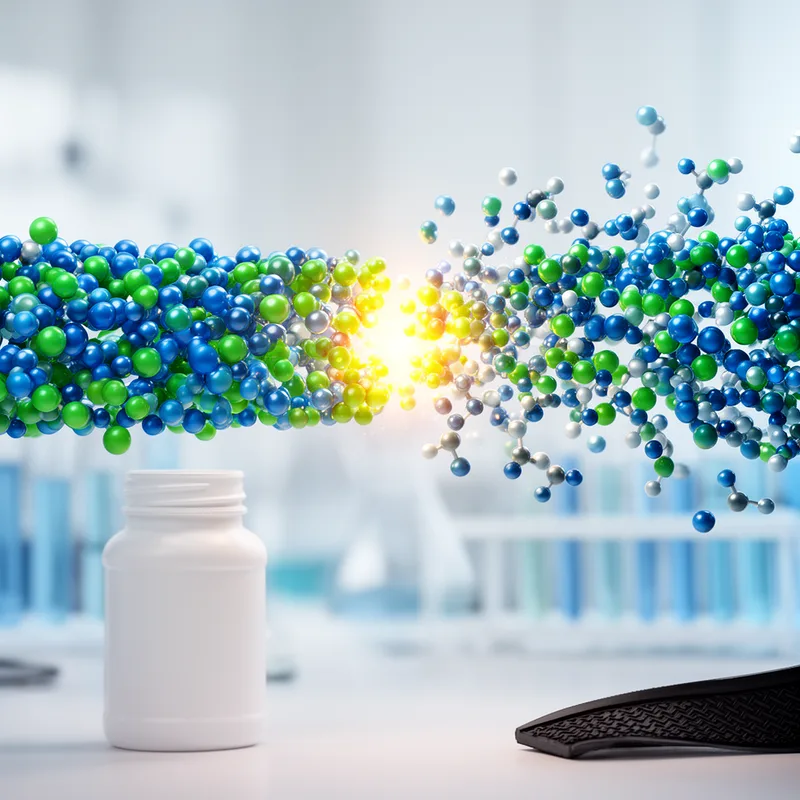
- During depolymerization, long chains of polymer are separated into smaller units that can be reused in manufacturing.
Examples
-
Through a process of depolymerization and purification, carpet materials like nylon 6 can be recycled into carpet pad, building materials, auto parts, and even more carpet.
Blog text (14) -
The kinetochore is then transported poleward on the surface of the microtubule without microtubule depolymerization, suggesting that motor proteins on the surface of the kinetochore or on the surface of the microtubules could be responsible for early chromosome movement.
Academic text (2009) -
The process of depolymerization allows plastic waste to be broken down into its original monomers for recycling.
-
In chemistry class, we learned that depolymerization is essential for converting polymers back into monomers for new applications.
Synonyms
 19
4.1
19
4.1

A process in which a substance is broken into simpler parts by chemicals or living things
 6
6.2
6
6.2
Something breaks into smaller pieces and falls apart
Antonyms
- Specialized
1
8.6
A process that joins many small molecules into one long molecule like plastic
How Depolymerized

Surface Forms
Morphology
depolymerization = polymerization (semi-transparent) = de + poly + mer + ize + ation
For someone who knows 'polymerization', adding 'de-' straightforwardly gives the reverse process of breaking a polymer down.
Etymology
The word depolymerization breaks into de- 'remove', poly- 'many' (as in polygon), and -ization 'the process', while polymer means 'many parts joined'. So, depolymerization is the process of taking a long chain of joined parts and breaking it back into single units, which is exactly what scientists mean by the term.