
polymerization
 1
8.6
1
8.6

- noun
- /ˌpɒlɪmərɪˈzeɪʃən/
- Specialized
- When used in newly formed scar tissue, the collagen structure becomes looser and excess collagen polymerization is prevented (36).
- actin polymerization
Examples
-
Normally, a blood clot forms from the polymerization of protein fibers circulating in the blood.
Fiction book (1998) -
In addition, the light used in the resin polymerization step could probably lead to hydroxyl radical production from trapped HP.
Academic text (2018) -
The synthesis and polymerization of NBHFA have been reported in the literature 29.
Academic text (2001) -
In addition, it is likely to be activated by the light used to promote resin polymerization during restorative procedures.
Academic text (2018) -
Polymerization was allowed to proceed for 25 minutes at room temperature in a humidifier, and the coverslip was carefully removed.
Academic text (2018) -
In time, the cascade of internal signaling events results in the polymerization of actin filaments at the front of the cell.
Academic text (2012) -
EHA inhibits the polymerization of collagen histologically and facilitates the restoration of collagen in scar tissue.
Academic text (2015) -
For example, NMDAR calcium transients promote actin polymerization, which recruits microtubule entry into dendritic spines.
Academic text (2017) -
Exactomer resins use vinyl ethers and cationic photoinitiators to trigger resin polymerization when struck by a UV laser beam.
Academic text (1995) -
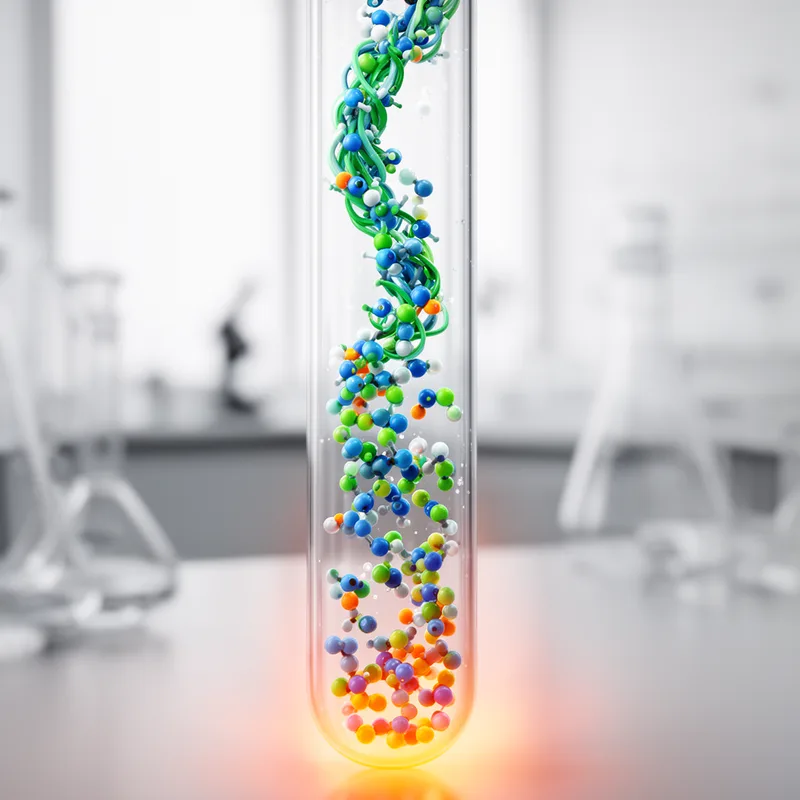
The process of polymerization allows small monomers to join together and form larger, more complex structures.
How Many
- Specialized
1
8.6

- Specialized
- Specialized
- Specialized
Surface Forms
Morphology
polymerization = polymerize (transparent) = polymer + ize + ation
Built from the verb 'polymerize' with the nominalizing suffix '-ation', a standard and predictable process.
Etymology
The word polymerization is built from poly- meaning 'many' and -mer meaning 'part'. So it literally means joining 'many parts', like threading many beads on a string, and that's why in chemistry polymerization is the process where small pieces called molecules join to make a large molecule called a polymer.