

dedifferentiation
- noun
- /ˌdiːˌdɪfərɛnʃiˈeɪʃən/
- Specialized
- Consistent with previous reports, we found SC marker gene expression to be retained in injury-induced dedifferentiation.
Examples
-
The fourth component of the malignant process, dedifferentiation, is shown by the examples given previously of loss of biological and cultural differentiation at the individual level and loss of aggregate differentiation at the community level.
Academic text (1993) -
In this case, dedifferentiation implies that through the invention of culture, humans have developed the ability to adapt to and survive in all ecosystems.
Academic text (1993) -
The identification of a partial mesenchymal transition provides important insights into the nature of SC dedifferentiation.
Academic text (2017) -
This dedifferentiation response is very rapid and most likely involves a signaling pathway between the gametophyte and the zygote or young embryo.
Academic text (1998) -
In summary, our findings indicate that dedifferentiation is a multifaceted process controlled by the interplay of cell-intrinsic programs and cell-extrinsic signals.
Academic text (2017) -
Traditionally, dedifferentiation has been considered a reversal to an earlier developmental stage in the SC lineage (Chen et al., 2007).
Academic text (2017) -
We found that bSCs and dSCs are distinct cell populations with different transcriptomes and repair features, indicating that the microenvironment is a key regulator of the dedifferentiation program.
Academic text (2017) -
During wound healing, specialized skin cells undergo dedifferentiation to promote tissue repair.
-
In plants, dedifferentiation allows mature cells to re-enter a state capable of becoming any cell type again.
-
The research focused on how dedifferentiation in certain animals enables them to regenerate lost limbs.
Synonyms
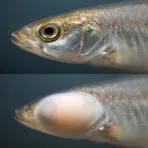
 8
6.7
8
6.7

A process in which a living part, like an organ, becomes simpler and less useful

Body cells change back to a simpler, less specialized form
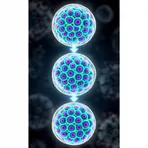
When cells do not change into different types during development
Antonyms
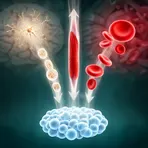
- Specialized
5
6.2
A process where cells change to have a special shape and job in the body
How Differentiated
- Specialized
1
4.9

- Specialized
5
6.2
- Specialized
Surface Forms
Morphology
dedifferentiation = dedifferentiate (semi-transparent) = de + differentiate + ion
Formed by adding the regular nominalizing suffix '-ion' to the verb 'dedifferentiate', a predictable derivation.
Etymology
The word dedifferentiation comes from the prefix de- ('remove' or 'undo') and the verb differentiate ('to become different or to have a special job'), so it describes cells 'losing' their special features and becoming more basic again.