
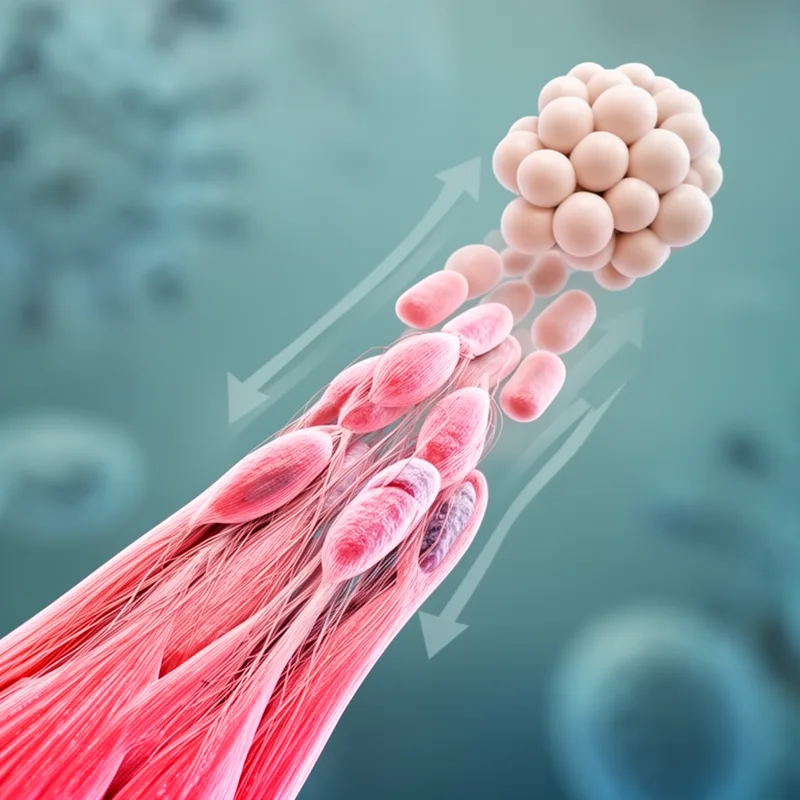
to dedifferentiate
- verb
- /ˌdiːˌdɪfərˈɛnʃieɪt/
- Specialized
- Under stress, the muscle tissue may dedifferentiate and lose its contractile properties.
Examples
-
Some plants have the ability to dedifferentiate their cells for regeneration after injury.
-
Certain cancer cells can dedifferentiate and begin dividing uncontrollably.
-
Cells can dedifferentiate.
-
Some cells dedifferentiate easily.
-
Researchers found that the stem cells could dedifferentiate and form a variety of cell types.
-
In response to injury, certain cells in the organism can dedifferentiate and start the healing process.
-
Scientists discovered that environmental changes might cause cells to dedifferentiate into a more primitive state.
Antonyms
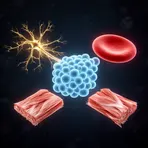

How Differentiated
- Specialized
 28
4.4
28
4.4

- Specialized
9
5.5
- Specialized
Surface Forms
Morphology
dedifferentiate = differentiate (semi-transparent) = de + different + iate
In this biological sense, 'de-' straightforwardly reverses 'differentiate', giving the meaning 'lose specialized characteristics'.
Etymology
Dedifferentiate starts with de- meaning 'reverse' and the part differentiate, which is related to different and means 'become special'. So, to dedifferentiate is to lose special features and go back to a simpler, less specialized cell state.