

covalence


 1
8.8
- noun
- /koʊˈveɪləns/
- Specialized
- In water, the covalence of oxygen is two, matching its number of shared electron pairs.
Examples
-
The covalence of an atom determines how many chemical bonds it can form.
-
The covalence of carbon is four.
-
Carbon has a covalence of four, allowing it to form complex organic molecules.
-
Higher covalence leads to more complex molecules.
-
In chemistry, covalence is the term used to describe the number of electron pairs an atom can share with others.
-
The covalence of carbon allows it to form four bonds with different elements, making it a versatile building block in organic chemistry.
-
When examining molecules, understanding covalence helps predict how atoms interact and bond with each other.
Synonyms
 1
8.9
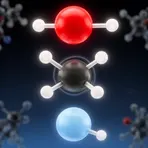
The number of chemical bonds an atom can form
 1
9.5
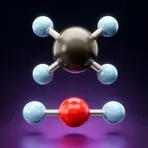
The number of bonds an atom can form with other atoms

The number of other atoms an atom shares electrons with
Surface Forms
Morphology
Etymology
Covalence comes from co- meaning 'together' and valence from a word meaning 'strength' or 'power', the same root behind valid. So covalence is an atom's 'together-strength', meaning how many bonds it can form with other atoms.