

covalency
- noun
- /koʊˈveɪlənsi/
- Specialized
- Oxygen has a covalency of two, allowing it to form two bonds with hydrogen atoms in water.
Examples
-
Carbon's covalency enables it to create complex molecular structures such as those found in organic compounds.
-
The covalency of carbon is four.
-
The covalency of an element can often be deduced from its position in the periodic table.
-
Oxygen has a covalency of two.
-
Carbon's covalency allows it to bond with four other atoms, forming a wide variety of organic molecules.
-
In chemistry, the covalency of an element helps determine the types of compounds it can form.
-
The covalency of nitrogen is three, enabling it to create stable molecules like ammonia.
Synonyms
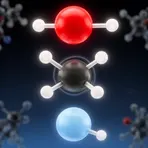
 1
8.9

The number of chemical bonds an atom can form
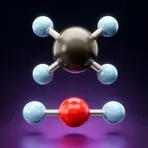

 1
9.5
The number of bonds an atom can form with other atoms
 1
8.8
The number of other atoms an atom can share electrons with to make bonds
Surface Forms
Morphology
Etymology
Covalency starts with co- meaning 'together' and uses valence from a root meaning 'power to join'. So covalency is the power an atom has to 'join together' with others by sharing electrons, which is why it tells how many bonds an atom can form.