
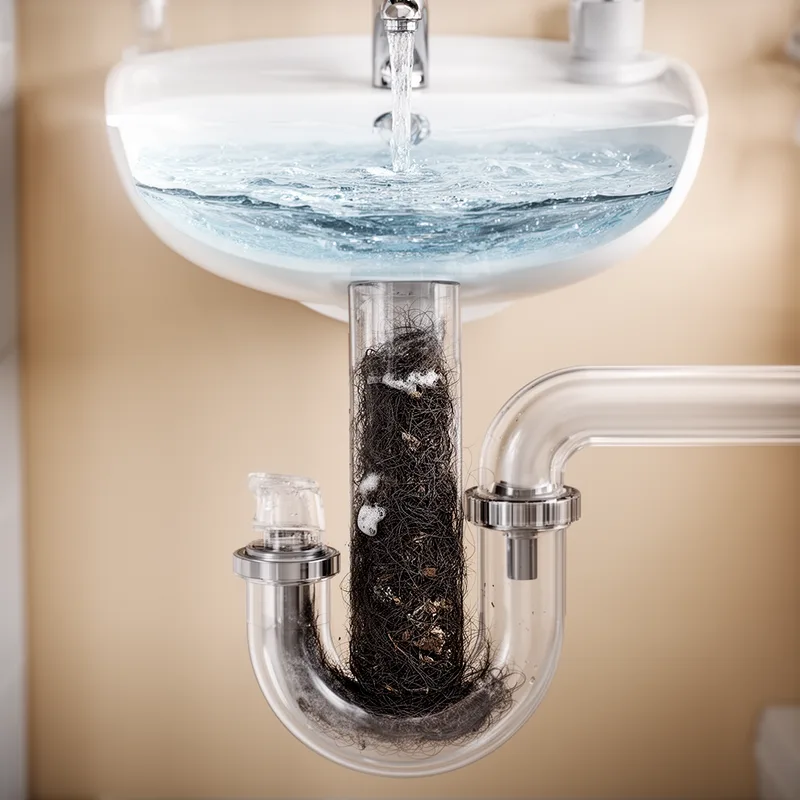
to congest


 1
5.3
1
5.3
- verb
- /kənˈdʒɛst/
- Once PSCo loses the ability to congest the lines, the threat of entry across the WCO-ECO line keeps prices close to their competitive levels.
- congest the lines
Loading YouTube…
Watch on YouTubeSo when we eat bad oils, it congests that bi lipid membrane and now you create inflammation around that cell.
- So when we eat bad oils, it congests that bi lipid membrane and now you create inflammation around that cell.
Examples
-
Because of the severity of these wake disturbances, the FAA restricts the distance between aircraft during takeoffs and landings, which can congest runways and the skies overhead.
Academic text (2003) -
As a result, more drivers would congest I-880 and S-237 freeways to San Jose (I was one of them).
Blog text (18) -
It turns out that PM2.5 particles congest the air during calm weather when there is no wind to blow them away.
Academic text (1998) -
The rationale for maintaining a BDP buffer still applies at the network edge, where a single flow can congest a link.
Academic text (2012) -
The accident caused several cars to congest the highway, leading to a long traffic jam.
-
During rush hour, buses can congest the main road, making it hard for other vehicles to move.
-
Excessive parking can congest the streets, preventing emergency services from getting through.
Synonyms
 ∞
3.0
∞
3.0
To stop movement, access, or progress
 264
3.7
264
3.7
To be unable to breathe because something blocks the throat or neck
 119
5.1
119
5.1
To block a path or view
 47
4.2
47
4.2
To make it harder for someone or something to move forward
 46
3.2
46
3.2
Push people or things together so they cannot move easily
 27
4.0
27
4.0
Become blocked so things cannot move
 21
3.2
21
3.2
To block a pipe or passage so flow stops
 18
4.5
18
4.5
To make something dirty or blocked so it does not work properly
 9
3.7
9
3.7
To block a drain or road so things cannot move through it
 6
6.4
6
6.4
To stop a supply by blocking its source or flow
 4
3.8
4
3.8
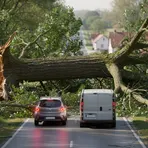
To stop movement through a road, pipe, or path

To become blocked or cause a block by dirt and grease

To block a road or a river so nothing can pass

To make movement or progress difficult by being a burden
Antonyms


How Blocked

Surface Forms
Morphology
congest = con + gest
Although analyzable as con- + gest historically, 'gest' is not a standalone English word and the meaning 'to block or fill' is not transparently derived from these parts for an average learner.
Etymology
Congest comes from Latin parts con- 'together' and gerere 'to carry', and it originally meant 'to heap or carry things together'. So, when something is congested, like pipes or traffic, it is full and blocked, making movement hard.