
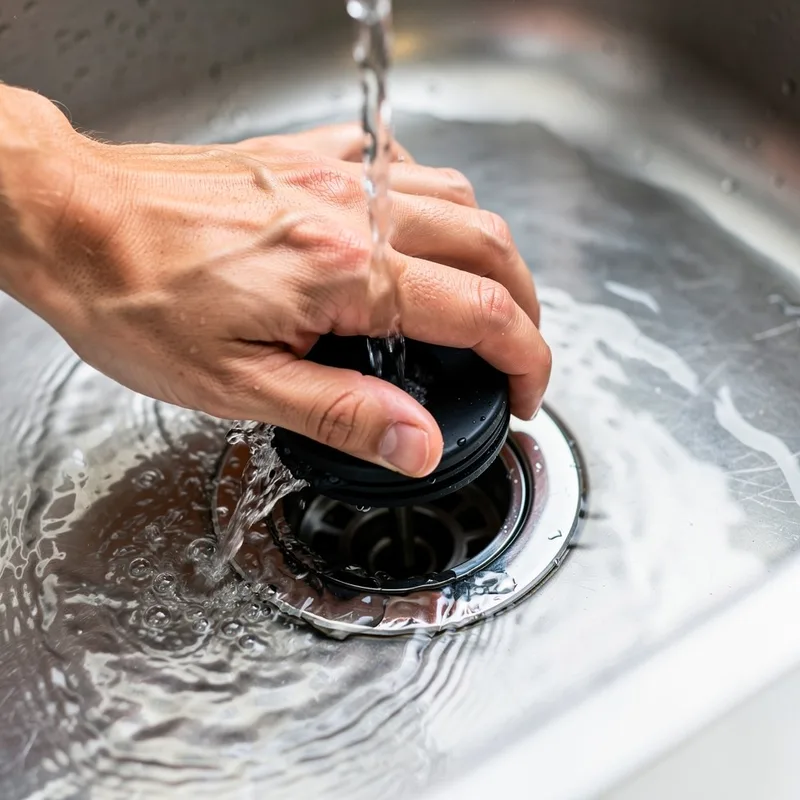
to stop up
 1
4.6
1
4.6

- phrasal verb
- /stɑp ʌp/
- They filled the pool to the brim with dirt and gravel, stopped up the spring that fed it, and toppled the circle of columns.
Examples
-
She had to stop up the fountain to keep the water from spilling everywhere.
-
Better stop up and warn them to stay inside.
-
Stop up the remaining part with leather or paper.
Fiction book (1993) -
The more they overthink the plumbing, the easier it is to stop up the drain.
-
If you intend to do this, you must positively stop up the drainpipe below.
Blog text (30) -
I thought i'’d just stop up.
-
To prevent leaks, you should stop up the holes in the wall with sealant.
-
They decided to stop up the cracks in the boat with some old cloth before sailing.
Synonyms
 ∞
3.0
∞
3.0
To stop movement, access, or progress
 66
1.9
66
1.9
To put something into a hole to stop a flow
 6
6.4
6
6.4
To stop a supply by blocking its source or flow
 5
8.4
5
8.4
Block an opening to stop the flow of liquid or air
 4
3.8
4
3.8
To stop movement through a road, pipe, or path
 3
4.6
3
4.6
To stop the flow of water or feelings by building a wall

 1
5.8
1
5.8
To block a pipe or drain so water cannot pass through

To block an opening to stop liquid or gas passing through

To become blocked or cause a block by dirt and grease

To block a road or a river so nothing can pass
Antonyms

How Blocked

Surface Forms
Morphology
stop + up
The meaning 'to fill or block something so that nothing can pass through' is directly derived from 'stop' (to prevent movement or flow) combined with the particle 'up', which here conveys closure or completion; together they form the productive phrasal-verb pattern 'verb + up' meaning to seal or completely halt flow. This compositional pattern is common and predictable, so a B1 learner who knows the constituents would likely infer the intended meaning.
Etymology
Stop up comes from the simple image of putting something into a hole or pipe to stop it up, like stuffing a cloth into a leak so water cannot pass. That's why it means 'to fill or block something so that nothing can pass through'.