
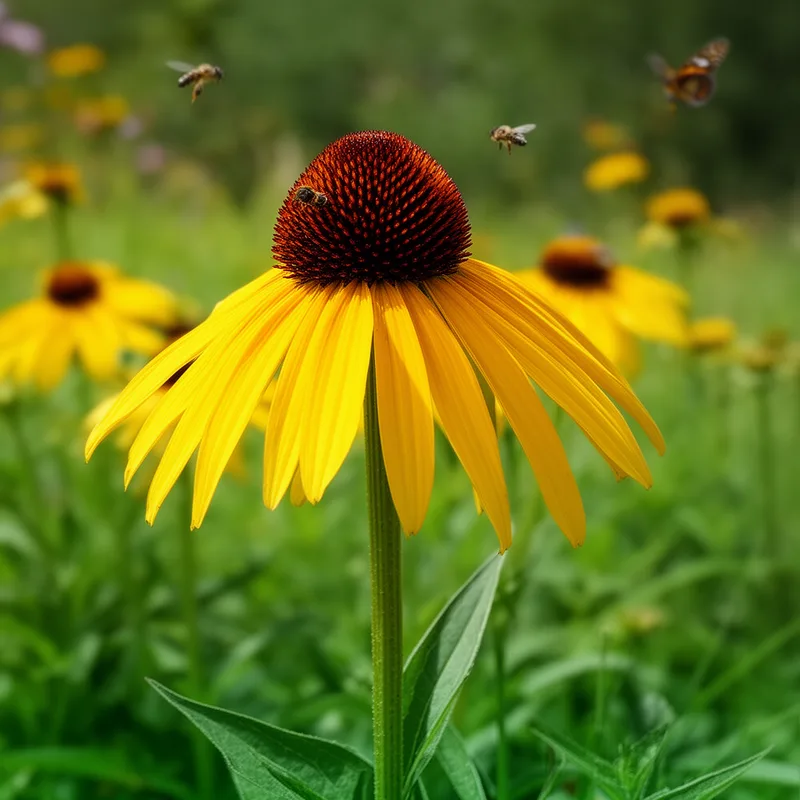
coneflower
 1
7.1
1
7.1

- noun
- /ˈkoʊnˌflaʊər/
- US
- The birds can eat coneflowers, sunflowers, etc.
- purple coneflower
- perennials including coneflowers
- coneflower petals
Examples
-
The cattle trail led south, past humped burial mounds covered over with wild wheat and blue coneflowers.
Fiction book (1996) -
But she also planted tree hydrangeas for children to run under and coneflowers to attract butterflies.
Fiction book (1998) -
Behind you are western coneflower and then blazing star.
Fiction book (1996) -
The garden was filled with vibrant coneflowers, attracting bees and butterflies throughout the summer.
-
In my yard, the coneflower blooms alongside lavender and daisies, creating a colorful landscape.
-
We planted several coneflowers to enhance the natural beauty of our flower beds and support local wildlife.
Synonyms

A tall North American wildflower with a central cone and drooping yellow or red petals

A tall garden flower with a brown cone and drooping yellow or red-brown petals

A tall wildflower with a red brown cone and drooping yellow petals

A coneflower with yellow or orange flowers

A North American plant like a daisy with hanging yellow or red petals and a cone-shaped center

A wildflower with a long cone and yellow petals that grows in western North America
A garden plant with bright yellow or orange cone-shaped flowers with dark centres

A tall North American plant with divided leaves and bright yellow flowers with drooping petals

A tall plant from North America with deeply cut leaves and large yellow flower heads with petals that bend down
A flowering plant with purple cone shaped petals often grown in gardens to attract bees
Compounds
A tall plant from North America with deeply cut leaves and large yellow flower heads with petals that bend down
- Specialized
A wildflower with a long cone and yellow petals that grows in western North America
A North American plant like a daisy with hanging yellow or red petals and a cone-shaped center
How Tall
46
1.0

- US
- US
1
7.1
80
1.0
- Specialized
23
1.0
Surface Forms
Morphology
Etymology
Coneflower comes from the simple English parts cone and flower, with cone the same word you see in a 'pine cone' or an 'ice-cream cone' to show the shape. So it is a flower with a 'cone-shaped' center, which explains the name and makes it easy to remember.