
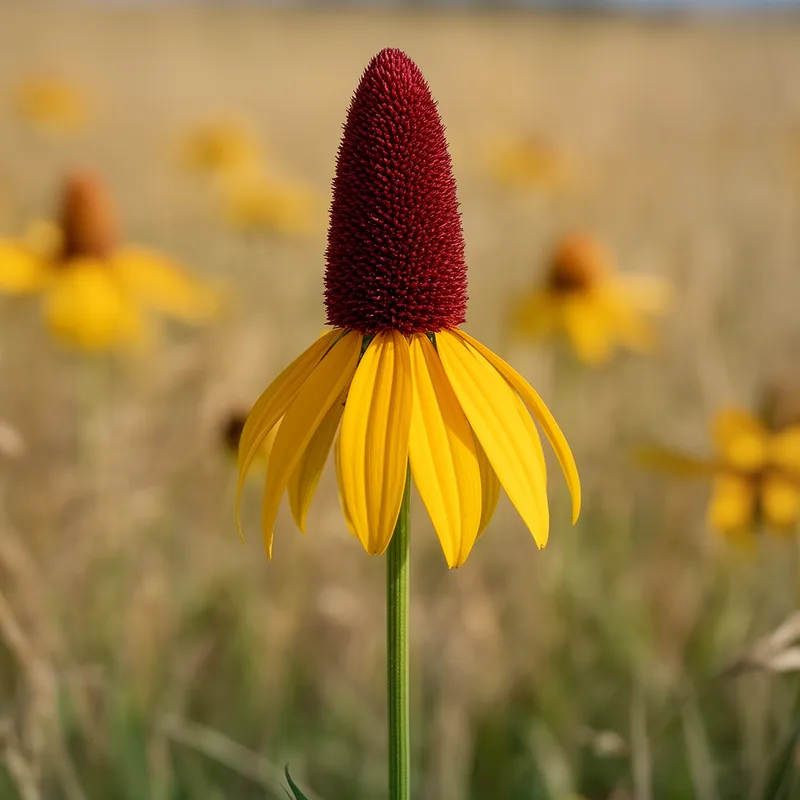
Ratibida columnaris
- noun
- Specialized
- The Ratibida columnaris thrives in dry, open prairies across the central United States.
Examples
-
Many wildflower enthusiasts admire the unique shape of the Ratibida columnaris in summer meadows.
-
Gardeners often plant Ratibida columnaris for its resilience and striking yellow petals.
-
The Ratibida columnaris blooms beautifully in summer.
-
I saw a Ratibida columnaris in the garden yesterday.
-
Many gardeners appreciate the Ratibida columnaris for its bright yellow petals and unique coneflower shape.
-
The Ratibida columnaris is commonly found in the wildflower fields of the Great Plains.
-
During summer, the Ratibida columnaris adds vibrant color to the landscape with its drooping petals.
Synonyms

A tall North American wildflower with a central cone and drooping yellow or red petals

A tall garden flower with a brown cone and drooping yellow or red-brown petals
Surface Forms
Morphology
Ratibida + columnaris
This is a Latin binomial (genus + species). A learner who knows 'Ratibida' could infer it names a type/species of that flower, but the epithet 'columnaris' is a specialized Latin descriptor (not common vocabulary), so the specific descriptive meaning cannot be derived from everyday words.
Etymology
Ratibida columnaris gets its name from the flower's shape: a tall, red-brown cone rises in the middle while the yellow petals hang down, so the bloom looks like a small column or a Mexican hat. That's why the species name columnaris points to the plant's 'column-like' center and helps you remember this coneflower.

