
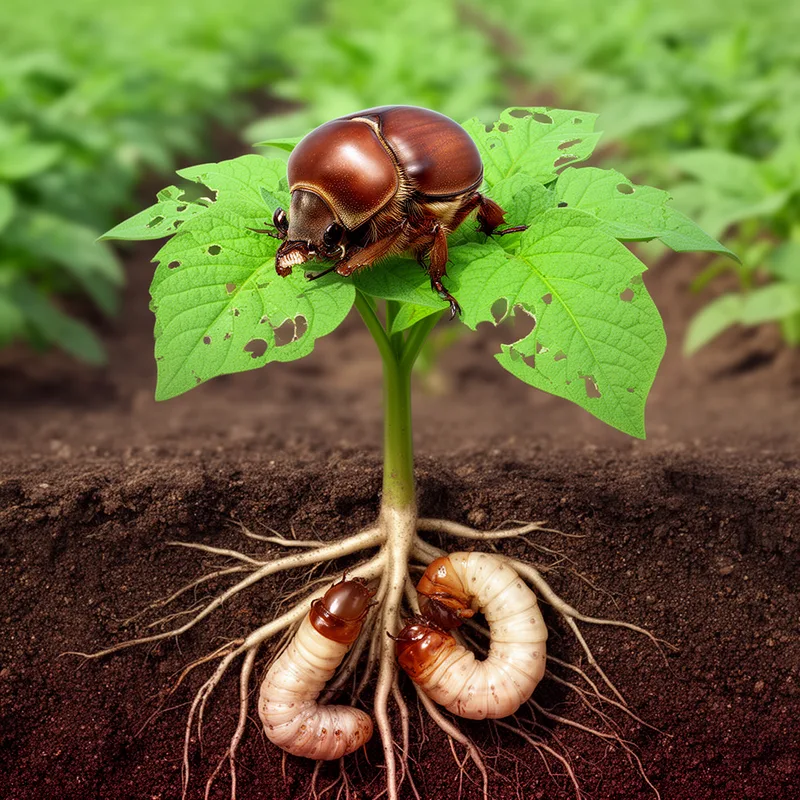
cockchafer
- noun
- /ˈkɒkˌtʃeɪfər/
- UK
- The cockchafer is often seen in gardens during spring.
Examples
-
The children were fascinated by the buzzing flight of the cockchafer in the garden.
-
A farmer discovered a cockchafer infestation destroying his young potato plants.
-
Larvae of the cockchafer can cause significant damage to lawns and crops.
-
Many farmers complain about the cockchafers damaging their crops.
-
The cockchafer larvae damage plants by feeding on their roots and leaves.
-
Many gardeners are concerned about the presence of the cockchafer in their vegetable patches.
-
During the spring, the cockchafer can be seen flying around gardens and fields.
Synonyms

 1
9.9
1
9.9

A large beetle that makes a loud buzzing sound when it flies
A large brown beetle whose adults eat leaves and larvae eat roots

A large brown beetle that eats plant roots and leaves

A brown beetle like a May bug that often damages plants
A large beetle that appears in late spring whose larvae eat plant roots and can damage lawns

A large brown beetle that appears in late spring and whose young eat plant roots

A beetle whose young eat plant roots and can damage lawns
Surface Forms
Morphology
Etymology
Cockchafer comes from two parts: cock (like a loud 'male bird') and chafer (an old word for a 'beetle'). So a cockchafer is a big, noisy beetle—easy to remember because these large beetles buzz in gardens and eat plants.