

catabolism
 1
8.1
1
8.1

- noun
- /kəˈtæbəlɪzəm/
- Specialized
- The process of catabolism allows the body to convert food into usable energy by breaking it down.
- catabolism of proteins
- anabolism and catabolism
Loading YouTube…
Watch on YouTubeWell, that means the ATPADP ratio is high because you're doing lots of catabolism.
- Well, that means the ATPADP ratio is high because you're doing lots of catabolism.
Examples
-
The process in which the body basically metabolizes itself is called catabolism and leads to muscle loss and weakness.
Academic text (2005) -
Currently, no study has investigated the optimal dosage of HMB under varying degrees of catabolism.
Blog text (23) -
This is largely what catabolism is about in biological systems.
-
Though weight loss is an indicator of catabolism, it is a late sign.
Academic text (2002) -
Catabolism itself isn't necessarily bad and is indeed necessary for growth, but the less catabolism, the better.
Blog text (28) -
And in general, if we're in this state of kind of chronic catabolism, that's not healthy, right, for our body.
-
Catabolism is the process of breaking down amino acids in the muscle to facilitate energy for training.
Academic text (1995) -
During stressful training, cortisol, which facilitates catabolism, is increased; however, with proper rest, cortisol concentrations return to normal.
Academic text (1995) -
In doing so, it links the metabolism of carbohydrates, fats, and proteins, as the catabolism of these compounds generates acetyl CoA.
Academic text (2017) -
In a state of catabolism, the body transforms stored nutrients into energy, which is crucial during fasting.
Synonyms
 19
4.1
19
4.1
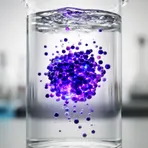
A process in which a substance is broken into simpler parts by chemicals or living things

Breaking large chemicals in the body into small parts to release energy

The process that breaks down food and body tissue to release energy
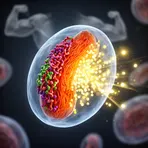
Cells break down complex substances to release energy
Antonyms

- Specialized
Process that makes complex molecules from simple ones in living things using energy
How Anabolic

Surface Forms
Morphology
catabolism = cata + bol + ism
Formed from Greek combining forms (cata- 'down' + -bol- 'throw') plus -ism; these elements are not productive or familiar to average learners, so the meaning 'breaking down' is not directly guessable from the parts.
Etymology
Catabolism comes from the Greek parts cata- 'down' and ballein 'to throw', so think of 'throwing down' big molecules into smaller parts. This 'breaking down' in the body gives off energy, which is why catabolism means turning complex substances into simpler ones and releasing energy, the opposite of anabolism in metabolism.